

If you grow oysters, shiitakes, or lion’s mane at home and dry the extras, learning how to rehydrate dried mushrooms for cooking for on a budget is the skill that connects your harvest to dinner. You need to decide what soaking method fits your species, how large a batch you cook at once, what basic kitchen tools you can reuse, and how confident you feel judging texture by touch. A thin oyster rehydrates very differently from a thick shiitake cap, and a single serving needs far less water and attention than a family pot of soup.
The good news is you do not need special machines to get tender results. Most home growers get excellent outcomes with a bowl, clean water, a cover, and a simple strainer, plus a clear plan for saving the flavorful soaking liquid. We assessed these examples for reuse value, food safety, and texture control. For broader context on keeping each harvest in top shape, browse the Harvesting, Drying and Storage guides before you soak your next batch.
What Actually Matters
Species, Thickness, and How Well Mushrooms Were Dried
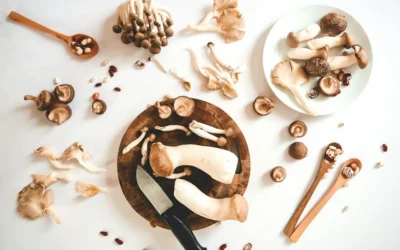
Start with what you dried. Thin oyster slices and delicate lion’s mane pieces absorb water quickly and turn soft with a short soak in cool or lukewarm water. Thick shiitake caps, dense stems, and whole buttons need more time because water must travel to the center. If your mushrooms were dried until cracker crisp and snapped cleanly, they will usually plump evenly. If they were leathery or stored in humidity, you may need to sort them and soak the thicker pieces longer.
You should match your expectations to the species rather than forcing every type to feel like fresh mushrooms. Oysters often become silky and a little chewy, which is perfect for stir fry and pasta. Shiitakes become meaty and savory, which suits braises and broth. When you understand this, you can choose whether to slice thick caps before soaking, remove tough stem bases, or keep small pieces whole for better bite. Growers commonly report that thin slices rehydrate in about half the time of whole caps, so a quick knife step can save you waiting.
Water Choice, Temperature, and Saving Flavor
Water is your main ingredient, so keep it clean and simple. Use filtered water or fresh tap water that tastes good on its own, since dried mushrooms absorb whatever you give them. Lukewarm water is the budget sweet spot for most home cooking because it softens tissue without cooking it or washing away aroma. Very hot water can work for a rush dinner, but it often makes texture rubbery and broth bitter, while cold water preserves aroma best when you have extra time.
Never pour your soaking liquid down the drain without tasting and straining it first. That amber liquid holds much of the umami you grew and dried for, and it can enrich risotto, gravy, ramen, and beans. Let grit settle to the bottom, then pour slowly through a fine mesh strainer lined with a coffee filter or clean cloth. If you had any musty smell during drying, which can relate to poor airflow described in how to prevent mold from too much humidity, discard the batch rather than trying to rescue it with seasoning.
Bowls, Covers, Strainers, and Storage Jars on a Budget
You already own almost everything you need. A wide, shallow bowl exposes more surface area than a tall mug, so pieces stay submerged and hydrate evenly. A small plate or lid placed directly on the mushrooms keeps floaters under water without buying weights. A basic mesh strainer plus a coffee filter handles grit, and a clean glass jar with a lid stores both dried mushrooms and leftover broth safely in the fridge for short term use.
When you compare options, prioritize versatility and easy cleaning over single purpose gadgets. A bowl you use for salads, a strainer you use for pasta, and jars you use for spawn or pantry goods will serve you for years. Clear containers help because you can see when caps have relaxed and stems have softened. If you track humidity for drying with tools like those in the best govee hygrometer thermometer for small batch guide, you will also have a better sense of how dry your mushrooms were going into storage, which predicts soak time.
Food Safety, Batch Size, and Your Experience Level
Think about food safety the same way you think about sterile work. Use clean hands, clean bowls, and fresh water, and do not leave mushrooms soaking on a warm counter all day. For most weeknight meals, a small bowl with one to two handfuls is easier to manage than a huge pot. Small batches let you check texture often, adjust seasoning, and avoid waste. Large batches make sense for soup or meal prep, but you will need fridge space and a plan to cook everything promptly after soaking.
Your experience level should guide how much you improvise. If you are new to home grown mushrooms, follow a simple routine first with measured water, a cover, and a timer, then taste as you learn. If you are comfortable judging doneness by squeeze and smell, you can reuse broth, blend stems into stock, or finish caps with a sear. Either way, cook rehydrated mushrooms thoroughly and refrigerate leftovers quickly. Dried mushrooms are forgiving, but once water returns, they behave like fresh produce again.
Here are a few options that show the range of low cost knowledge and kitchen friendly approaches you can pair with bowls and jars you already own:
This article contains affiliate links. If you buy through one of our links, FungiPop may earn a commission at no extra cost to you. Commissions never influence which products we recommend or how we rank them. Read our Affiliate Disclosure for details.
Quick Picks at a Glance

Prime How to Forage for Mushrooms without Dying

Prime The Complete Guide to Edible Wild Plants

Prime How to Create a Family Mushroom Growing Business

Prime Mushrooming Without Fear
As an Amazon Associate we earn from qualifying purchases. Product prices and availability are accurate as of the date/time indicated.
Pros
- Perfectly tailored for absolute beginners with no prior mycology background
- Photographic, plain language approach makes field identification faster and less stressful
- Strong safety first focus builds confidence while respecting real risks
- Compact and portable format works well as a trail companion
Cons
- Covers only 29 species, so experienced foragers will need a more comprehensive reference
- Compact trim size means photos and text can feel small for detailed study at home
- Not a deep scientific textbook, so readers wanting taxonomy and advanced keys may want more
How to Forage for Mushrooms without Dying by Frank Hyman is an accessible photographic guide built specifically for absolute beginners. It focuses on just the 29 wild edible mushrooms you are most likely to find, making it ideal for hikers, campers and curious cooks who want a safe start.
The standout strength is Hyman's folksy, memorable teaching style that turns safety checks into easy field rules. His slice test for morels and clear comparisons to toxic false morels and other lookalikes help you make confident decisions quickly outdoors.
At 256 pages with full color photos, the Storey Publishing paperback feels sturdy yet portable for a backpack or tote. The compact 5.5 by 6.95 inch trim and clear layout make it easy to flip to a species while on the trail.
The narrow focus is both a benefit and a limit, since seasoned foragers will outgrow 29 species quickly. Readers wanting deep mycology, microscopy or extensive keys will also find this intentionally simple and will need a second reference.
Overall, this is one of the friendliest entry points into mushroom foraging with a strong safety mindset. If you walk in the woods and want to learn what you can safely eat without getting overwhelmed, this is the guide to buy first.
Publisher: Storey Publishing, LLC, Publication Date: October 5, 2021. Language: English with 256 pages of photographic instruction.
ISBN-10: 1635863325, ISBN-13: 978-1635863321. Trim size: 5.5 x 0.8 x 6.95 inches with a portable paperback format.
Category strength in Foraging, Mushrooms in Biological Sciences and Biology reflects strong reader trust for beginner use.
Pros
- Comprehensive single volume covering plants, mushrooms, fruits and nuts
- Goes beyond ID with harvest timing, preparation methods and recipes
- Fully illustrated and beginner friendly for hikers and campers
- Strong reader rating for practicality and enjoyable writing style
- Great companion for outdoor learning and self sufficient eating
Cons
- Not a replacement for hands on expert training, especially for wild mushrooms with toxic lookalikes
- Illustrations may feel less precise than full color photo guides for fast field ID
- Some species may not grow in every region, so local cross checking is needed
The Complete Guide to Edible Wild Plants, Mushrooms, Fruits, and Nuts by Katie Letcher Lyle is a practical foraging reference for beginners and outdoor enthusiasts. It is built for hikers, campers and curious nature lovers who want to turn everyday walks into food finding adventures.
What sets it apart is the focus on use, not just identification. Each entry covers when to harvest, how to recognize key species, plus folklore and tested recipes like fiddlehead soup and elderberry pie for real kitchen results.
The book is fully illustrated and organized for quick reference in the field and at home. Descriptions are clear and approachable, making it easy to learn common greens, mushrooms and berries without feeling overwhelmed by technical botany.
As with any foraging book, caution is needed, especially with wild mushrooms that have toxic lookalikes. Some readers may also want more color photos or region specific guidance to supplement the illustrations for confident identification.
Overall, this is an engaging, highly usable companion for anyone starting their foraging journey. If you want one friendly volume that teaches finding, preparing and enjoying wild foods, this guide delivers strong value and inspiration.
Start with easy and unmistakable species like blackberries, wild asparagus and common greens before trying mushrooms. Use the harvest timing notes to plan walks in the right season for the best flavor and safety.
Always cross check identification with illustrations and descriptions, and when in doubt, skip tasting. Bring the book on hikes and practice spotting, then try one simple recipe at a time at home.
Pros
- Authored by professional growers with 20 years of hands-on experience
- Covers both hobby growing and profitable business development
- Includes 300 photos that make each cultivation stage easy to follow
- Practical, experience-based advice ideal for beginners and entrepreneurs
Cons
- 151 pages may feel brief for growers seeking advanced commercial scale detail
- Focused on family farm methods, less suited for large industrial operations
- Print guide format lacks video or interactive digital tutorials
How to Create a Family Business in Mushroom Growing by Serge Honcharov is a practical guide for home growers and future farm owners. It is written for absolute beginners, hobbyists who love natural foods, and entrepreneurs planning a mushroom income.
Its standout strength is real world experience distilled into simple steps for gourmet and medicinal varieties. With 300 photos, readers can follow each stage visually while learning business strategies for consistent yields.
The book is a compact 151-page paperback that prioritizes clarity and usability over theory. The layout supports easy learning, with visual walkthroughs, success stories and professional secrets collected over 20 years.
The main limitation is depth for large scale commercial growers, as the focus stays on family and small farm systems. Readers wanting advanced lab work or industrial automation will likely need additional resources.
Overall, this is a strong starter manual for anyone wanting to grow mushrooms at home or launch a small profitable farm. If you value practical guidance with visual support, this family tested approach is a smart pick.
Publisher: Independently published, Publication Date: April 6, 2024, Language: English
Print Length: 151 pages, ISBN-13: 979-8322033721, ASIN: B0D1YSK1CV
Dimensions: 6 x 0.35 x 9 inches, Item Weight: 7.5 ounces
Series: Book 1 of 3, Cultivating mushrooms at home and on the farm, Category: Self-Employment
Pros
- Safety focused approach ideal for first time foragers
- Clear photos and checklists make identification faster and easier
- Covers only delicious edible species with cooking and storage tips
- Compact, easy to follow format from a recognized expert
Cons
- Limited species coverage, not a complete reference for advanced foraging
- Printed in 2007, so some names and taxonomy may feel dated
- Conservative gill avoidance rule excludes many edibles experienced hunters enjoy
Mushrooming Without Fear by Alexander Schwab is a 128-page starter guide built specifically for nervous beginners. It is ideal for nature lovers and food fans who want to forage tasty wild mushrooms without second guessing safety.
The core strength is its safety first approach with eight clear gathering rules, including avoiding gilled mushrooms and trusting smell. Each featured species like cep, chanterelle, hedgehog fungus and hen of the woods gets multiple photos plus a quick identification checklist.
The layout is practical for field use with clear photos, checklists and sections on season, handling and storage. At 7.44 by 9.65 inches and 128 pages, it is large enough to see details clearly yet light enough to carry in a day pack.
The narrow focus means you will not learn dozens of species, and experienced foragers may want a more comprehensive regional guide. Some taxonomy and names reflect its 2007 publication date, so pairing it with a current local resource is smart.
For beginners who value confidence over completeness, this is an excellent first foraging book. It teaches safe habits, highlights truly delicious species, and adds cooking and storage advice with recipes to enjoy your harvest.
Publisher: Skyhorse, published October 17, 2007. Language: English, Print length: 128 pages.
ISBN-10: 1602391602, ISBN-13: 978-1602391604. Size: 7.44 x 0.5 x 9.65 inches, Weight: 1.05 pounds.
Category focus: Sustainable Agriculture, Mushrooms in Biological Sciences, Outdoors and Nature Reference with recipes and storage guidance.
Matching Gear to Your Grow
If you grow shiitakes on blocks or logs and dry thick caps for winter soups, focus on slicing, patience, and broth saving. Cut caps into even strips before drying when you can, then soak in lukewarm water with a plate weight until pliable. The ideas in Mushrooming Without Fear help you stay confident about which types are worth drying whole and which are better sliced, so you waste less and soak more evenly.
If you grow oysters or lion’s mane in small indoor batches and cook for one or two people, keep your setup minimal. A cereal bowl, a saucer for a weight, and a small strainer are enough. Rinse off substrate crumbs first, soak briefly until silky, then squeeze gently and sear. The broad pantry context in The Complete Guide to Edible Wild Plants is useful illustration for how different textures behave in simple meals, which helps you avoid over soaking delicate varieties.
If you forage a little and grow a lot, or you want to scale up drying for family meals, pair kitchen routine with better identification and planning skills. Use How to Forage for Mushrooms without Dying to sharpen your confidence with wild types before you mix them with home grown batches in the same jar, since different species rehydrate at different rates. If you are thinking beyond the kitchen toward regular production, How to Create a Family Business in Mushroom shows the range of planning involved, and that mindset helps you label jars by species, date, and thickness. Clear labels plus reusable gear discussed in Grow Bags, Spawn Bags and Liquid Culture storage routines will make every budget soak more predictable.
Common Mistakes
Blasting with boiling water to save time. Pouring rolling boil water over dried mushrooms can scorch the outside while the center stays firm, leaving you with chewy edges and bland broth. You get better texture and deeper flavor with lukewarm water and a few extra minutes, checking often. Reserve hot water only for a very small, thin batch you plan to cook immediately.
Tossing the soaking liquid or serving it gritty. Many beginners either discard all that savory broth or pour it straight into soup with sand at the bottom. Instead, let the bowl rest for a minute after soaking, decant carefully, and strain through cloth. Taste the strained broth separately. If it is clean and mushroomy, use it. If it tastes dusty or sour, leave it out.
Soaking too long at room temperature and storing loosely. Once rehydrated, mushrooms are perishable and should be cooked soon and refrigerated if not eaten right away. Do not leave a covered bowl on the counter overnight or return damp pieces to a pantry jar with dry ones. Cook what you soak, cool leftovers quickly, and keep dried stock airtight with desiccant or in a cool dark cupboard until the next meal.
Who Should Wait or Buy Differently
A dedicated rehydration gadget or premium soaking set is not ideal for most budget growers who already own bowls, strainers, and jars, and it is not a good fit if your dried mushrooms smell musty, look moldy, or were stored damp. In that case, pause and focus on improving drying and storage airflow first, then practice small soak batches with fresh dried oysters or shiitakes you trust. If you cook dried mushrooms only a few times per year, borrow what you need and spend your budget on better drying screens or airtight jars instead.
Frequently Asked Questions
Should you rinse dried mushrooms before soaking?
Yes, give them a quick rinse to remove dust, substrate bits, or grit from drying screens. Shake off excess water, then place them in fresh clean water for the main soak. This keeps your final broth cleaner and reduces crunch from debris.
Can you reuse mushroom soaking water for cooking?
In most cases yes, when the mushrooms were properly dried and stored and the liquid smells pleasantly earthy. Let sediment settle, strain through a fine filter, and use it to enrich soups, sauces, or grains. Discard it if it smells sour, musty, or unusually bitter.
How do you know when rehydrated mushrooms are ready?
They should feel pliable and evenly soft with no hard dry core when you squeeze a thick piece. Thin varieties relax quickly, while thick caps may need more time and a flip halfway through. Once ready, gently squeeze out excess liquid, slice if needed, and cook thoroughly for best flavor and texture.

Write Your Review
No reviews yet. Be the first to share your experience!