

If you are asking how long to dehydrate mushrooms for storage for on a budget, you are really asking how to reach cracker-dry texture without buying more gear than you need. Your answer depends on species being grown, batch size, budget, and experience level. Thin oyster caps dry far faster than dense shiitake stems or thick lion’s mane lobes, and a small first flush needs a simpler plan than back to back harvests.
In November 2026, you can get reliable results with a low-cost setup and a clear guide that explains timing, dryness cues, and jar storage. This buying guide shows you how to pick learning material that matches your kitchen and your goals. Start with our Harvesting, Drying & Storage hub to see how drying fits into the full harvest routine.
What Actually Matters
Thickness, Species Texture, and Batch Size
You control drying time most with slice size and load size. Growers commonly report slicing caps and stems to about the thickness of two stacked coins for even drying, with denser stems cut thinner than tender caps. Uniform pieces help every tray finish together and reduce chewy centers.
Think about batch size before you choose a guide. If you harvest a few handfuls at a time, you need advice on small oven batches and fan drying. If you fill trays from a monotub or monotub and fruiting chamber setup, look for guidance on rotating trays, avoiding overlap, and drying in stages.
Time Ranges and Cracker-Dry Cues
A clock alone will mislead you because humidity, thickness, and airflow change every batch. Growers commonly report thin oyster slices becoming brittle in 6 to 10 hours on low heat, while thicker shiitake or lion’s mane pieces often need longer until the centers snap. Use those ranges as a starting point, then rely on feel.
A good budget guide should teach bend and snap checks, not just hours. You want pieces that snap cleanly and feel light, with no cool or leathery spots when you break a thick piece open. Look for books that explain conditioning, which means resting cooled pieces in a jar for a day and watching for any softening that signals more drying time.
Heat Source, Airflow, and Budget Tradeoffs
On a budget, your heat source is often an oven on its lowest setting with the door cracked, a small stackable dehydrator, or a fan plus room air for pre-drying. Growers commonly report better results at gentle warmth with steady airflow than at higher heat that case hardens the outside. Your guide should explain how to arrange pieces with space between them and when to rotate trays.
Room humidity matters as much as equipment. If your fruiting area runs damp, move drying to a drier room and keep fresh flushes away from direct mist during the final day. Our explainer on how to prevent mold from too much humidity shows why airflow and placement matter long before harvest.
Storage Readiness and Keeping Quality
Dry is only half the job, sealed storage is the other half. Look for guides that cover cooling fully before jarring, using clean mason jars with tight lids, adding food-safe desiccant, and keeping jars cool, dark, and labeled by date. A simple hygrometer routine can help, and our small batch hygrometer guide explains how to track room conditions without extra cost.
We evaluated these guides for clarity on safety basics, such as discarding any batch with off smells, slime before drying, or visible mold, and avoiding rehydrating and re-drying leftovers many times. A practical book will remind you to wash hands, clean trays and jars, and keep dried mushrooms away from spices or coffee that can add moisture and odors.
To see how different books handle timing charts, dryness checks, and jar storage, here are a few options that show the range from short starter primers to broad reference cookbooks:
This article contains affiliate links. If you buy through one of our links, FungiPop may earn a commission at no extra cost to you. Commissions never influence which products we recommend or how we rank them. Read our Affiliate Disclosure for details.
Quick Picks at a Glance

Prime Food Dehydration Made Easy

Prime Ultimate Food Dehydrator Cookbook for Beginners

Prime Smart Food Dehydration Book: Essential Techniques

Prime Complete Dehydrator Cookbook: Dehydrate Fruit
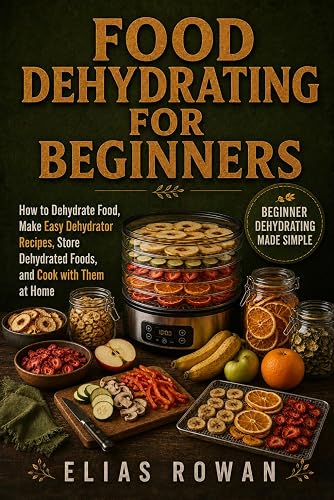
Prime Food Dehydrating for Beginners
As an Amazon Associate we earn from qualifying purchases. Product prices and availability are accurate as of the date/time indicated.
Pros
- Clear, encouraging language ideal for first-time dehydrators
- Covers the full process from benefits and tools to techniques, storage and recipes
- Compact and well organized for quick learning and easy reference
- Great focus on reducing waste by preserving surplus produce
Cons
- Only 78 pages, so experienced users may want more advanced detail
- Independently published guide without full color photos or extensive charts
- Limited coverage of specific dehydrator models and in-depth troubleshooting
This book by Knipp Shephard is a compact beginner's guide to home food dehydration and preservation. It is written for first timers, busy families and anyone with extra produce who wants simple, low waste snacks.
It walks through benefits, types of dehydration, essential tools, core techniques, safe storage and starter recipes. The advice is practical and action oriented, helping readers skip common mistakes and get tasty results sooner.
At 78 pages in a lightweight 5 x 8 inch paperback, it is well organized and easy to follow. The language stays simple and encouraging, with clear sections you can use for quick reference.
The tradeoff for simplicity is limited depth for experienced preservers seeking advanced methods. As an independently published title, it also lacks the photography and detailed charts found in larger preserving cookbooks.
Overall, Food Dehydration Made Easy is a helpful, confidence building primer for beginners. If you want a straightforward start to dehydrating, storing and snacking, this guide is a solid choice.
Publisher: Independently published, Publication date: August 11, 2023, Language: English.
Print length: 78 pages, ISBN-13: 979-8857027783, Item weight: 5 ounces.
Dimensions: 5 x 0.18 x 8 inches, Format: Paperback beginner's guide.
Categories: Dehydrator Recipes, Canning and Preserving, Nutrition.
Choose this guide if you are new to dehydrating and want the basics explained clearly. It is ideal for learning tools, methods, food safety basics and storage without feeling overwhelmed.
Look elsewhere if you already dehydrate regularly or want a large recipe collection with photos. This is a starter manual focused on fundamentals and confidence, not an advanced cookbook.
Pros
- Beginner friendly system with clear doneness tests and storage instructions
- Huge variety beyond snacks, including jerky, herbs, powders, soups and complete dinners
- Practical reference tools like charts, checklists and pantry inventory sheets add long term value
- Positive early reader feedback highlights clarity, reliability and ease of use
Cons
- 159 page length may feel compact given the broad range of recipes covered
- Focused on beginners, so experienced users may want more advanced techniques
- Large 8.5 x 11 inch format is great in the kitchen but less portable for travel
The Ultimate Food Dehydrator Cookbook for Beginners by Wren Drysdale is a practical guide built for first time users, gardeners, campers and snack makers. It focuses on a simple Prep, Dry, Store, Use method that removes confusion around temps, timing and food safety.
Standout value comes from more than 150 recipes that go well beyond basic apple chips. You get fruit leathers, beef and turkey jerky, herbs, powders, crackers, instant soups and full meals like Minestrone in a Jar and Beef Taco Rice Bowl, each with temp, time, yield and doneness test.
In real world use, the step by step directions and doneness checks help prevent under drying and trapped moisture. Conditioning tips, hot soak and cold soak rehydration methods, and storage guidance make batches safer to keep and easier to use for pantry meals or trail food.
The book layout is designed for kitchen reference with quick charts for fruits, vegetables, herbs and meats, plus checklists and a reusable log. At 159 pages in a large format, it is easy to read while prepping, though experienced users may want deeper advanced techniques.
Overall, this is an excellent starter system for anyone who wants healthy snacks, garden preservation or lightweight camping meals. If you want clear instructions and reliable results from your first tray, this guide delivers confidence and long term pantry value.
Publisher: Independently published, Publication Date: September 5, 2026
Print Length: 159 pages, Language: English, ISBN-13: 979-8172137747
Dimensions: 8.5 x 0.36 x 11 inches, Weight: 1.06 pounds
Category: Dehydrator Recipes, Camping and RV Cooking, Camping Books
This book is ideal if you just bought a dehydrator and need exact slicing, temperature and timing guidance. It is also great for gardeners with surplus produce and families wanting healthy homemade snacks.
Look for the Prep, Dry, Store, Use checklists and rehydration charts if you plan camping or RV meals. The just add water breakfasts and complete dinners are especially useful for travel and busy weeknights.
If you already dehydrate regularly and want advanced methods, you may outgrow the beginner focus. For most new to intermediate users, though, the clarity and variety offer strong everyday value.
Pros
- Science-based approach written with agricultural engineering precision, not just basic recipes
- Complete workflow from equipment selection and prep to drying, conditioning and long-term storage
- Wide coverage including fruits, vegetables, greens, jerky, powders, leathers and botanicals
- Practical for beginners managing garden harvests or farmers market bulk buys
- Focus on safe, chemical-free preservation for whole foods diets
Cons
- 136-page format is concise, advanced users may want additional recipe volumes
- Focused only on dehydration, not a full guide to canning, freezing or fermenting
- Independently published layout may feel more instructional than highly illustrated cookbooks
Smart Food Dehydration is Book 2 in the Mastering Food Storage and Preservation series, written for home gardeners, market shoppers, preppers and zero waste households. It teaches moisture extraction science to turn fresh harvests into flavorful, nutrient dense staples that store for years.
The standout focus is food science over basic recipes, with clear guidance on water activity, temperature control and halting enzymatic decay. Practical chapters cover sugary fruits, citrus, root crops, leafy greens, vegetable powders, instant meals, fruit leathers, jerky and botanicals with safety protocols.
The book is organized as a hands-on manual with equipment guides for dehydrators, prep tools and storage containers plus conditioning and oxygen absorber calculations. The step by step structure makes it easy to follow in the kitchen without prior preservation experience.
As a 136 page dehydration focused guide, it does not replace a full library on canning, freezing or fermenting. Readers looking for hundreds of tested recipes may want a companion cookbook for expanded meal ideas.
Overall, this is a smart pick for beginners who want safe, chemical free, grid independent pantry building with confidence. If you want to reduce waste, save on produce and create long lasting staples, this guide delivers clear, actionable value.
Title: Smart Food Dehydration, Book 2 of Mastering Food Storage and Preservation by Duygu Gul Erdik. Publisher: Independently published, August 19, 2026, English, 136 pages.
Format: Paperback, 6 x 0.31 x 9 inches, 9.3 ounces, ISBN 13: 979-8193707165. Category: Reference with focus on dehydrator recipes, whole foods diets, and preserving topics.
Choose this guide if you grow produce, buy in bulk or want emergency ready staples without chemicals or freezers. It is ideal when you need equipment advice, safety basics and storage math in one place.
Pair it with airtight jars, oxygen absorbers and a reliable dehydrator for best results. If you already dehydrate at an advanced level, use it as a storage and safety refresher alongside recipe collections.
Pros
- Comprehensive coverage of 75 plus foods and 125 recipes in one beginner friendly book
- Strong practical focus on snacks, instant meals, storage and rehydration methods
- Includes low-temp raw and plant-based recipes alongside meat, jerky and classic favorites
- Clear organization with equipment guidance and troubleshooting for first time users
Cons
- Paperback binding can be harder to keep open on the counter while cooking
- Beginner focused, so experienced users may want more advanced techniques
- Requires a separate food dehydrator, as no appliance is included
The Complete Dehydrator Cookbook by Carole Cancler is a 226-page all-in-one guide to home food drying. It is built for beginners, gardeners, campers and homesteaders who want to preserve seasonal produce and make portable snacks.
Its core strength is the A to Z drying section covering more than 75 foods, from fruits and vegetables to meat, herbs, yogurt, tofu, pasta and rice. Paired with 125 recipes for jerky, fruit leathers, chips, instant stews, teas, breads and cookies, it works as both a technique manual and a daily cookbook.
The book is well organized with clear sections for equipment, troubleshooting, storage and rehydration. The 7.5 by 9.25 inch paperback layout is easy to navigate, with straightforward instructions that help new users get drying quickly without confusion.
It is introductory by design, so advanced dehydrator owners may find some sections basic. As a paperback, it will not lay flat like a spiral bound cookbook, and you will still need your own dehydrator to follow along.
Overall, this is one of the most practical starting points for home dehydration thanks to its breadth, simplicity and recipe variety. If you want to save produce, make healthy snacks and build just-add-water camping meals, it is an excellent addition to your shelf.
Publisher: Callisto. Publication date: April 28, 2020. Language: English with 226 pages in paperback format.
ISBN-10: 1646117018, ISBN-13: 978-1646117017. Dimensions: 7.5 x 0.56 x 9.25 inches, weight: 2.31 pounds.
Category: Dehydrator Recipes, Canning and Preserving, and Hiking and Camping. Covers more than 75 foods and 125 recipes for home use.
Pros
- Beginner friendly language that skips complicated science and focuses on practical steps
- Covers the full cycle from prep and drying to storage, rehydrating and cooking
- Helps reduce food waste by turning extra produce into useful snacks and meal ingredients
- Compact and organized format that is easy to follow for small home kitchens
Cons
- 87 page length is introductory, so advanced users may want deeper recipes or charts
- Emphasis is on method and routine rather than a large collection of complex recipes
- Readers expecting extensive photos or scientific detail may find it too simple
Food Dehydrating for Beginners by Elias Rowan is an 87 page guide designed to take the guesswork out of home dehydrating. It is aimed at first time dehydrator owners, busy home cooks and anyone wanting to waste less produce while building a handy pantry.
Standout coverage includes prepping fruits, vegetables and herbs, making snacks, fruit leather and flavor boosters, plus storing and rehydrating for everyday cooking. The focus on slicing thickness, tray spacing, doneness checks and simple routines makes the method feel doable from the first batch.
The book keeps things practical with a clean, organized layout and straightforward language instead of technical food science. Its compact 6 x 9 inch paperback format is lightweight, easy to keep in the kitchen and simple to follow step by step.
As a beginner book, it stays with fundamentals and everyday meals like soups, bowls, sauces and oatmeal rather than advanced preservation systems. Experienced users looking for a large recipe collection or in depth troubleshooting charts may find it too introductory.
For beginners who want confidence, less waste and usable dried foods, this is a solid starting point. Start with simple foods, follow the routine and you will quickly turn your dehydrator into a regular kitchen tool.
Publisher: Independently published, published June 22, 2026 in English with 87 pages of beginner focused instruction.
ISBN-13: 979-8183708332, paperback dimensions 6 x 0.21 x 9 inches with a lightweight 4.2 ounce format for kitchen use.
Listed in Snack Cooking, Dehydrator Recipes and Fruit Cooking categories, making it easy to find for home preservation readers.
Start with forgiving foods like apple slices, banana chips and herbs to learn slicing, spacing and drying times. These choices help you practice doneness checks without sticky or uneven results.
Slice evenly, avoid crowding trays and allow full cooling before testing for dryness. Small habits like these prevent moisture problems and improve texture across batches.
Once dry, store in clean airtight containers with labels, then rehydrate in soups, sauces and oatmeal. This simple cycle turns extra produce into ready to use pantry staples.
Matching Gear to Your Grow
If this is your first small flush of oysters from a kit or bag, keep it simple. You need basic slice guidance, oven and fan options, and clear photos or descriptions of done versus leathery. FOOD DEHYDRATION MADE EASY fits that need with beginner-friendly steps, though it is less detailed on large batch rotation and long pantry planning.
If you harvest mixed gourmet mushrooms through the season, pick a broader reference you can reuse. Complete Dehydrator Cookbook is useful for comparing fruit, vegetable, and mushroom routines in one place and for building confidence with repeat batches. It is less focused on mushroom-only storage, so pair it with a simple jar and desiccant routine.
If your goal is a low-waste pantry with months of storage, focus on guides that stress safe long-term methods. SMART FOOD DEHYDRATION: Essential Techniques leans into equipment choices and storage systems for the home, which helps if you want to standardize jars, labels, and cool storage. It assumes you will spend more time on setup, so it can feel like more than a casual grower needs.
If you want plain home routines for weekly cooking and saving extras, choose a practical starter manual. Food Dehydrating for Beginners walks through using a dehydrator with more confidence, reducing waste, and cooking with dried foods. It is lighter on deep troubleshooting, so very humid kitchens may still need extra attention to airflow and conditioning checks.
Common Mistakes
Pulling trays by the clock. Time charts are only a start. If you jar pieces that still bend or feel cool inside, moisture will return in storage and invite spoilage. Break a thick piece, cool it fully, then check for a clean snap before you pack any jar.
Overloading trays to save a cycle. Overlapping slices trap steam and dry unevenly, so edges turn brittle while centers stay chewy. Dry in a single layer with small gaps, rotate trays once or twice, and run a second small batch rather than piling pieces high.
Sealing warm mushrooms or skipping conditioning. Warm pieces fog jars and reabsorb water, and skipping the rest-and-check step hides damp centers. Cool fully, rest in a loosely closed jar for 12 to 24 hours as growers commonly report for conditioning, and return anything that softens for more drying before final sealing.
Who Should Wait or Buy Differently
A dehydration cookbook is not ideal for you right now if you only grow rare micro-batches for fresh cooking, if you lack any low-heat drying setup and airtight jars, or if you need medical or foraging safety advice beyond basic kitchen preservation. In those cases, focus first on fresh harvest handling and storage jars, borrow a dehydrator for a trial run, or choose a mushroom-specific safety resource before building a dried pantry.
Frequently Asked Questions
How long does it take to dehydrate mushrooms for storage?
Growers commonly report 6 to 12 hours for sliced culinary mushrooms at gentle heat with good airflow, with thin pieces on the shorter end. Your exact time shifts with species, thickness, load size, and room humidity, so use cracker-dry snap as your finish line rather than the clock alone.
How can you tell mushrooms are dry enough to store?
Let pieces cool fully, then break the thickest ones. They should snap crisply, feel light, and show no damp or leathery core. If they bend or soften after a day in a closed jar, return them for more drying time before sealing for storage.
Can you store dried mushrooms on a budget without fancy gear?
Yes. Cool cracker-dry pieces fully, pack them into clean mason jars with tight lids, add food-safe desiccant if you have it, and keep jars cool, dark, and labeled. Avoid warm attics, damp basements, and frequent opening, and use any jar that loses its crunch or picks up off odors with extra care.



Write Your Review
No reviews yet. Be the first to share your experience!