

If you are searching for the best temperature to dehydrate mushrooms, you are really choosing how to protect flavor, texture and shelf life after harvest. Your ideal setting depends on the species being grown, batch size, budget and experience level, not on a single number that works for every kitchen. Get it right and your flushes turn cracker dry and keep for months, get it wrong and thick stems stay leathery while thin edges brown.
In 2026, most home growers use a small electric dehydrator with adjustable heat and steady airflow rather than an oven or passive air drying. This guide explains what to look for in low heat control, circulation and tray design, and you can browse more ideas in our Harvesting, Drying and Storage section as you plan your setup.
What Actually Matters
We assessed listings based on temperature range, airflow design and tray usability for home mushroom growers. Use these four criteria to compare any model you consider, even beyond the examples shown below.
Low Temperature Range and Control Stability
The low end of the dial matters more than the high end for mushrooms. Growers commonly report the most reliable results in the mid 90s to just over 100 degrees, with enough time for moisture to move out of dense stems without cooking the outside. Look for a unit that can hold steady in that low zone instead of swinging up and down.
You should also consider how the control is labeled and how you will confirm it. An analog knob with a broad range can work well if you pair it with a separate oven thermometer or hygrometer inside the chamber. A simple one button design can be convenient, but it gives you less ability to dial back heat for delicate oysters or lion’s mane.
Even Airflow and Heat Circulation
Even circulation is what separates a mushroom worthy dehydrator from a basic warmer. Look for 360 degree circular flow or high heat circulation that moves through each tray, which helps prevent damp spots in the center and over dried edges. Without that movement, you can end up rotating trays constantly and still get uneven batches.
Good airflow also lowers the risk of holding moisture too long, which can invite sour smells and surface mold. If you have dealt with excess moisture in the fruiting stage, the lessons in how to prevent mold from too much humidity in your grow apply here as well, since slow, stuffy drying is never helpful. Choose a fan driven design that eliminates hot spots and keeps air moving around every cap and stem.
Tray Height, Count and Batch Size
Tray height determines whether you can dry mushrooms whole or need to slice everything. Extra tall trays let you keep buttons and thick clusters intact, which preserves natural size and reduces prep work. Standard height trays still work, but you will spend more time cutting large lion’s mane pom poms or meaty shiitake caps to fit.
Count matters for flush size. A five tray stack suits most home monotub harvests and lets you spread slices in a single layer with space between pieces. Stackable and removable trays add flexibility, since you can run fewer trays for a small picking or add trays when several tubs flush at once.
Materials, Cleanup and Everyday Use
You will use this gear after every flush, so materials and cleanup deserve attention. Look for BPA free, dishwasher safe trays and solid polypropylene that does not warp or hold odors. Removable trays that rinse clean in the sink save time when spores and fine debris collect in the mesh.
Think about where the unit will live and what else you might dry. Many home growers also preserve herbs, veggies, spices, fruit and jerky, so a model that handles low heat for mushrooms and higher heat for other foods adds value. A compact countertop footprint and simple controls make it more likely you will actually dry each harvest promptly.
To see how these tradeoffs look in real models, here are a few options that show the range from basic multi tier drying to a mushroom focused design with taller trays.
This article contains affiliate links. If you buy through one of our links, FungiPop may earn a commission at no extra cost to you. Commissions never influence which products we recommend or how we rank them. Read our Affiliate Disclosure for details.
Quick Picks at a Glance

NutriChef Electric Countertop Food Dehydrator
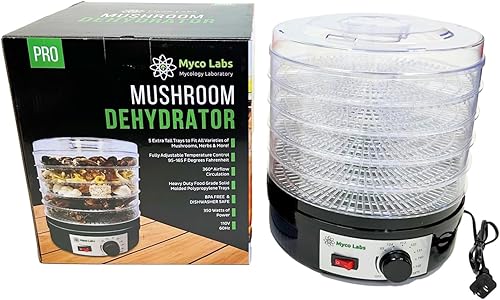
Prime Myco Labs 350 Watt Mushroom Dehydrator with 5
As an Amazon Associate we earn from qualifying purchases. Product prices and availability are accurate as of the date/time indicated.
Pros
- Easy one button operation with no learning curve
- Retains nutrients for healthier homemade snacks
- Removable stackable trays make cleaning and storage simple
- Versatile performance for meats, fruits, vegetables and herbs
- Compact and lightweight for small kitchens and apartments
Cons
- Basic single button control lacks digital timer and precise temperature adjustments
- 5 tray plastic system holds smaller batches than large stainless steel dehydrators
- Requires manual checking since there is no automatic shut off indicator mentioned
The NutriChef Electric Countertop Food Dehydrator is a compact 5 tier preserver built for home use. It is ideal for beginners, busy parents and meal preppers who want homemade jerky, dried fruits and veggie chips over store bought snacks.
Its standout strength is simple, effective dehydration with high heat circulation up to 180F. It handles beef jerky, fish, mushrooms, fruits and vegetables while retaining up to 97 percent of vitamins and minerals for better nutrition and flavor.
The design measures 7.68 x 13 x 13 inches and weighs only 4 pounds, so it fits easily on most counters. The black housing looks clean and modern, and the 5 removable stackable trays make loading, cleaning and storage very convenient.
The tradeoff is basic control, as the one press operation lacks a digital timer and fine temperature steps. The plastic tray system is light and easy to handle, but it feels less premium than stainless steel and suits small to medium batches best.
Overall, this is a practical, user friendly choice for everyday healthy snack making. If you want an affordable, compact dehydrator for jerky, fruit slices, kale chips and herbs, it delivers solid value and ease of use.
Brand: NutriChef, Model Type: Electric Countertop Dehydrator, Color: Black, Size: One Size
Dimensions: 7.68 x 13 x 13 inches, Weight: 4 Pounds, Product Group: Kitchen
Capacity: 5 removable stackable trays, Max Temperature: 180F with one press operation
Best For: Beef jerky, fish, mushrooms, fruits, vegetables, potato chips, kale chips and herbs
Pros
- Extra tall trays save time by drying mushrooms whole
- Low 95 degree setting preserves texture, flavor and quality
- 360 degree airflow ensures consistent results across all trays
- Lightweight 5 pound cylindrical design is compact and easy to store
- BPA free dishwasher safe trays make cleanup simple
Cons
- Manual knob control lacks digital display and timer for precision
- 11 inch cylindrical capacity is smaller than large stackable square models
- No additional trays or expansion options mentioned for larger batches
The Myco Labs 350 Watt Mushroom Dehydrator is a compact cylindrical dehydrator built specifically for mushroom growers, yet versatile enough for everyday kitchen use. It suits beginners and hobbyists who want simple low temperature drying without complex settings.
Its standout feature is the set of five extra tall trays with a double height top tray, so you can dry mushrooms whole and retain their natural shape. The 350W element with 360 degree air circulation dries evenly at 95 degrees, which is ideal for preserving quality.
The unit measures about 11 inches square and weighs just 5 pounds, making it easy to place and store. Trays are made from custom molded heavy duty solid polypropylene that is BPA free, food safe and dishwasher safe.
The trade off is the basic manual temperature knob from 95 to 165 degrees with no timer or digital readout, so you need to monitor batches yourself. Capacity is also modest compared to large rectangular dehydrators, which may limit big harvests.
Overall, this is a practical, purpose built choice for mushroom drying plus herbs, veggies, spices and jerky. If you value tall trays, gentle low heat and easy cleanup in a compact unit, it is a smart fit.
Power: 350 watts with conductive heating and SMART 360 degree air circulation.
Capacity: 5 extra tall polypropylene trays with double height top tray.
Temperature: Adjustable knob from 95 to 165 degrees, ideal mushroom range 95 to 106 degrees.
Dimensions: 11 x 11 x 11.7 inches, 5 pounds, black cylindrical design.
Material: BPA free food safe polypropylene, dishwasher safe trays.
Matching Gear to Your Grow
If you grow frequent small batches of oysters or shiitake in a spare closet, prioritize gentle low heat and tall trays. The Myco Labs 350 Watt Mushroom Dehydrator fits that pattern with its 350W conductive element, adjustable knob from 95 to 165 degrees, and guidance to dry most mushrooms at 95 to 106 degrees. Its five extra tall trays and 360 degree circular airflow let you dry many caps whole, though the analog knob means you should confirm the chamber with a separate thermometer for precision.
If you want one appliance for mushrooms plus kitchen staples, look for broader versatility and simple operation. The NutriChef Electric Countertop Food Dehydrator offers one press operation, five stackable trays, high heat circulation through each tier, and a maximum temperature of 180 degrees F. That setup suits fruit, vegetables, fish, meats and jerky as well as mushrooms, though the tradeoff is less fine control at the very low end and standard tray height that often requires slicing large specimens.
If you grow large lion’s mane or dense clusters that fruit heavily, choose around tray clearance first and temperature stability second. Whole pom poms and thick stems need vertical space and steady air movement to dry to the center without case hardening. Growers running Martha tents or multiple tubs, as described in Monotubs, Martha Tents and Fruiting Chambers, often do better with a tall tray model and single layer loading rather than piling pieces high to save a cycle.
Common Mistakes
Cranking the heat to finish faster. Running near the 165 to 180 degree top end might feel efficient, but it can brown edges, harden the outside and trap moisture inside thick stems. You get a better result by staying in the low zone growers commonly report and giving the batch more time with steady airflow.
Overloading trays and blocking airflow. Crowding slices, stacking caps on top of each other, or mixing very thick and very thin pieces leads to uneven drying. Spread everything in a single layer with gaps, slice dense stems to uniform thickness, and leave room for air to travel between trays.
Storing before the batch is cracker dry. Mushrooms that still bend often spoil in the jar within days. Let pieces cool, then check that stems snap cleanly and caps feel light and crisp, and consider confirming stability with ideas from best govee hygrometer thermometer for small batch before sealing with desiccant.
Who Should Wait or Buy Differently
A dedicated dehydrator is not ideal for you if you harvest only a tiny picking every few weeks and already own a convection oven with a reliable low setting and good ventilation. It is also not a good fit if you lack storage space or plan to pause growing for a season, since a bulky five tray tower will sit unused. In those cases, focus on improving harvest timing and airtight storage first, then invest when your flushes become regular enough to justify the counter space.
Frequently Asked Questions
What is the best temperature to dehydrate mushrooms for long storage?
Growers commonly report the most consistent quality in the mid 90s to just over 100 degrees, and one mushroom focused model lists 95 to 106 degrees for most mushrooms. That low range dries gently and helps preserve shape and aroma. Higher settings can work for other foods, but they increase the risk of browning delicate caps.
Can I use a regular food dehydrator instead of a mushroom specific model?
Yes, as long as it holds a stable low temperature and moves air evenly through all trays. Look for adjustable heat down to around 95 degrees, removable stackable trays, and easy cleaning. Mushroom specific tall trays are helpful for whole specimens, but not required if you are comfortable slicing.
How do I know when mushrooms are dry enough to jar?
Properly dried mushrooms feel light, crisp and cracker dry with stems that snap rather than bend. Let the batch cool for 15 to 20 minutes, then check the thickest pieces again before packaging. If any piece still feels cool, soft or leathery, return the batch for more time rather than sealing it.


Write Your Review
No reviews yet. Be the first to share your experience!