

If you are planning your first oyster grow, getting ideal humidity and temperature for oyster mushrooms for first grow right is the difference between thick, meaty clusters and leggy, dried out pins. You do not need a lab, but you do need a clear plan for moisture, fresh air, and steady temps that fits your room and schedule.
This buying guide walks you through how to choose climate gear based on species, batch size, budget, and experience level. We evaluated the range from simple sensors to automated boxes and tents, so you can match the tool to your grow instead of overspending on features you will not use.
What Actually Matters
Humidity Control Style, Not Just Max Mist Output
Oysters love moist air during fruiting. Growers commonly report a target of 85 to 95 percent relative humidity for pinning and early fruiting, with enough evaporation so caps stay dry to the touch. What matters when you shop is how that humidity is delivered and held steady.
Manual misting with a spray bottle can work for one kit, but levels swing up and down between mistings. Ultrasonic systems with adjustable levels or timed cycles hold a narrower range and need less attention. Look for easy refills, adjustable output, and fine mist that does not soak the mushrooms directly.
Stable Temperature in the Oyster Sweet Spot
Temperature drives how fast mycelium runs and how clean your caps form. Growers commonly report blue and pearl oysters fruit well around 60 to 70 degrees Fahrenheit, while pink oysters prefer warmer conditions. For a first grow, stability matters more than chasing a perfect number.
You should measure temps where the mushrooms actually sit, not just your wall thermostat across the room. Avoid heat that cooks the block or cold drafts from windows and exterior doors. If your room swings a lot, choose enclosed gear with gentle heating support or move the grow to a more stable closet or corner.
Fresh Air Exchange That Does Not Dry Everything Out
Oysters use a lot of oxygen and stretch into long stems with tiny caps when carbon dioxide builds up. You need steady fresh air exchange, but too much fan power will strip humidity and stall pins. The goal is gentle, frequent turnover, not a wind tunnel.
When you compare gear, check for timed fans, filtered intakes, and airflow that moves around the chamber rather than blasting the blocks. Small boxes often use intermittent fans. Larger tents pair a dedicated FAE fan with a humidifier. Either way, you want controls you can dial back if edges start cracking or pins stall.
Monitoring, Alerts, and Ease of Tuning
You cannot manage what you do not measure. A clear display or phone app that logs temperature and humidity helps you spot night drops or midday dry outs. Accuracy around plus or minus half a degree and a few percent RH is plenty for home growing.
Look for preset alerts, simple dials or app sliders, and parts you can wipe clean quickly. If you need a manual every time to change a setting, you will adjust less often. For background on sensors, fans, and humidifiers, browse our Humidity, FAE & Climate Control hub before you buy.
To see how these ideas look in real gear, here are a few options that show the range from basic monitoring to fully automated growing:
This article contains affiliate links. If you buy through one of our links, FungiPop may earn a commission at no extra cost to you. Commissions never influence which products we recommend or how we rank them. Read our Affiliate Disclosure for details.
Quick Picks at a Glance

Prime Govee H5074 Bluetooth Thermometer Hygrometer

Prime Shroomagic Smart Mushroom Grow Box Indoor Kit

Prime North Spore BoomRoom II Automated Mushroom Grow

Prime MOFOGDR Smart Mushroom Grow Box EL-01 with Auto
Prime Crownow Smart Mushroom Grow Box Kit with Auto
As an Amazon Associate we earn from qualifying purchases. Product prices and availability are accurate as of the date/time indicated.
Pros
- Excellent accuracy from Swiss-made sensor for both temperature and humidity
- Fast 2-second refresh rate with stable long-range Bluetooth connection
- Helpful app with graphs, custom alerts, and CSV data export for tracking trends
- Tiny, portable design fits anywhere and mounts easily with hanging hole
- Versatile for greenhouses, incubators, closets, nurseries, and instrument storage
Cons
- Bluetooth only model with no WiFi, so remote monitoring is limited to in-home range
- No onboard display, you must use the smartphone app to view readings
- Operating humidity range of 20 percent to 80 percent is limited for very damp or dry environments
The Govee H5074 is a mini Bluetooth thermometer hygrometer designed for precise indoor climate monitoring. It is built for plant growers, reptile keepers, cigar collectors, and homeowners who need to track temperature and humidity without guesswork.
Its standout feature is the Swiss-made sensor that refreshes every 2 seconds with impressive accuracy. Paired with the Govee Home App, you get live readings, trend graphs, and instant alerts when conditions move outside your preset range.
The design is ultra compact at just 1.57 inches square and weighs only about 10 grams. The white plastic body feels clean and simple, and the hanging hole plus included lanyard make it easy to place in tents, cabinets, incubators, or on a wall.
The main limitation is Bluetooth connectivity without WiFi, so you must be within range to sync data. There is also no screen on the unit itself, which means the phone app is required for all readings and history.
Overall, the H5074 is a reliable, portable, and user-friendly sensor for everyday monitoring. If you want accurate, app based tracking with exportable data for home or hobby use, it is a smart and practical choice.
Model: Govee H5074 Bluetooth Thermometer Hygrometer, white mini design for indoor use.
Accuracy: Temperature ±0.54°F, Humidity ±3%RH with 2-second refresh rate from Swiss-made sensor.
Connectivity and Storage: Bluetooth range up to 262ft without obstacles, 20-day onboard storage, 2-year app data with CSV export.
Size and Mounting: 1.57W x 1.57H inches, 10.48g, wall mount with hanging hole and string included.
Operating Limits: Upper temperature range up to 60C, operating humidity 20 percent to 80 percent.
Pros
- Automates humidity, airflow and lighting to remove daily manual misting and fanning
- Flexible open layout works with different block sizes and monotub style grows
- Even nano misting supports healthy colonization and fruiting stages
- Attractive transparent display box that looks great on a countertop
Cons
- Humidity presets are limited and high setting can leave water pooling in base
- Plastic housing feels brittle and some units arrived damaged in shipping
- Small water reservoir needs daily refilling and fan runs continuously
The Shroomagic SC-GB is a smart indoor mushroom grow box designed to automate the trickiest parts of home cultivation. With a spacious 16x11x15 inch chamber, it suits beginners and hobbyists growing gourmet and functional mushrooms without building a DIY monotub.
Standout features include ultrasonic nano humidification with three stage settings, continuous fresh air exchange, and adjustable LED lighting with timer control. In real use, reviewers note it keeps humidity steady and reduces manual misting, making fruiting more hands off than traditional kits.
The transparent plastic housing with Mylar and PET interior creates a clean viewing chamber that fits well on a kitchen counter. Controls are simple with one touch lighting and humidity presets, so setup is beginner friendly and daily maintenance is minimal.
Build quality is the main concern, as some buyers report brittle plastic, shipping damage, and a small water tank that needs daily refills. Humidity control is also limited to fixed presets, and the fan runs constantly which can cause pooling or noise over time.
Overall, this is a solid entry point for anyone wanting automated humidity, airflow and light in one compact unit. If you want full climate precision or pro level durability, look elsewhere, but for easy, low effort home grows it delivers.
Brand: Shroomagic, Model: SC-GB, Dimensions: 16L x 11W x 15H inches, Weight: 15 pounds.
Frame Material: Plastic, Inner Material: Mylar and PET, Color: Transparent, Unit Count: 1.
System: Ultrasonic nano humidifier with 3 levels, fresh air exchange fan, adjustable LED with timer.
Pros
- True plug and play automation eliminates constant hand misting and fanning
- Vertical 5 shelf layout maximizes yield per square foot in a small footprint
- Clear vinyl walls make it easy to monitor pins, canopies and harvest timing
- Built in spore containment and runoff tray for cleaner indoor growing
- Purpose built for mycology with balanced airflow, humidity and spacing
Cons
- Large 18 cubic foot tent still needs dedicated floor space plus power and ventilation
- Clear vinyl interior requires regular cleaning to prevent fog residue and buildup
- Beginners may need time to dial in humidity and FAE settings for different varieties
The North Spore BoomRoom II is a fully automated 5-rack Martha tent designed to replace messy monotubs with a controlled indoor biosphere. It is built for culinary growers, hobby mycologists and anyone ready to move from manual misting to consistent, high yield fruiting.
Standout performance comes from the paired Myco-Mister II and FAE fan system. The mister holds humidity at 90 percent plus for strong pinning, while the fan exhausts CO2 to encourage thicker stems, larger caps and fewer aborts across flushes.
The design uses a sturdy metal frame with ultra clear heavy duty vinyl and five reinforced racks offering 18 cubic feet of vertical growing space. A negative pressure layout with filtration plus a Spore Floor tray helps contain spores and catch runoff for cleaner home use.
There are tradeoffs to consider. You will need a dedicated corner with power and ventilation, and the vinyl interior requires regular wiping to stay clear. Beginners may also need a few cycles to dial in placement and airflow for their specific varieties.
Overall, the BoomRoom II is a serious upgrade for growers who want automation, scale and visibility in one system. If you want dense canopies without daily fanning and spraying, this purpose built tent is an excellent long term investment.
Pros
- Automates humidity, air exchange, watering and lighting for truly hands-off growing
- Onboard display and button controls make it easy to set cycles without extra tools
- Compact glass viewing design fits office desks and small apartments
- Includes heating pad, carbon filters, grow lights and spray system in one kit
- Versatile for mushrooms plus moss, herbs and small indoor plants
Cons
- Interior grow space is smaller than expected and assembly can be tricky solo
- Instructions are unclear and spray settings need trial to avoid overwatering and mold
- Report of grow lights failing early from moisture raises durability questions
The MOFOGDR EL-01 Smart Growing Chamber is an automated monotub style fruiting chamber designed for indoor mushroom cultivation in small spaces. It suits apartment growers, hobbyists and office desk gardeners who want to set parameters once and avoid daily misting and fanning.
Standout functions include automatic humidification, timed ventilation, auto spray watering and programmable grow lights with day tracking. In real use, owners report it maintains humidity and airflow well once dialed in, and the separate observation lamp makes checking growth easy without opening the box.
The eco-box uses acrylic panels with tempered glass viewing and measures about 15.67 x 10.59 x 13.07 inches. It includes activated carbon filters on intake and exhaust, a heating pad with insulated pad for colder rooms, and a marked water tank so you can see levels at a glance.
Drawbacks are notable. Assembly is awkward alone since panels do not lock before screwing, the interior feels compact for larger flushes, and the manual is vague. You will need to tune spray times carefully to prevent overwatering and mold, and moisture protection for the lights could be better.
Overall, this is a convenient all in one starter chamber for hands-off mushroom, moss or small plant growing if you accept the size limits. Buy it for automation and compact indoor use, not for large yields or commercial reliability.
Model EL-01 by MOFOGDR is a 15.67 inch L x 10.59 inch W x 13.07 inch H chamber made with acrylic, tempered glass and plastic frame in black. Inner materials include Mylar and PET for humidity retention.
Control module on the top cover manages temperature and humidity display, humidification cycles, ventilation timing, spray watering schedule, grow light brightness and timer, plus grow day counting. Package includes heating pad, insulated pad, carbon filters and lighting lamps.
Pros
- Fully automated humidity, light and airflow reduces manual misting
- Beginner friendly monotub alternative with simple one button operation
- Versatile for multiple gourmet and medicinal mushroom types
- Built in air filtration and growth timer supports cleaner, more consistent grows
Cons
- Box only, mushroom substrate, spores or grow blocks sold separately
- Compact 14.5 inch footprint limits batch size for serious growers
- Mixed early feedback points to a learning curve with settings and cleaning
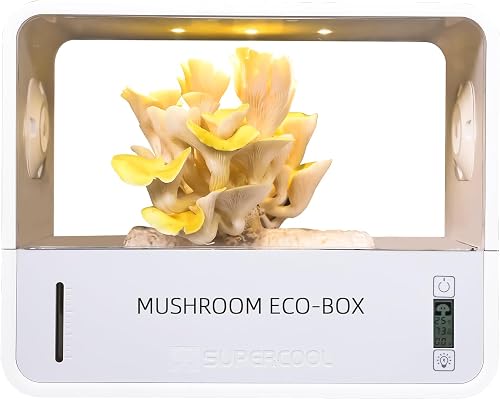
The Crownow sce-001 Smart Mushroom Growing Box is an all in one automated fruiting chamber designed for indoor home cultivation. It is aimed at beginners and hobbyists who want a cleaner, simpler alternative to DIY monotubs and manual misting.
Standout features include automatic humidity regulation with a built in hygrometer and humidifier, plus an auto cycling fresh air fan with filtration. The 3 mode grow light lets you adjust color temperature for different growth stages, while the growth duration tracker helps you time harvests more accurately.
In real world use, the system keeps conditions more stable than open tubs, which can support faster pinning and more consistent flushes for oyster, shiitake, enoki and reishi. The workflow is simple, just add water to the tanks, place your colonized block inside, and power on.
Build quality centers on a lightweight white and gray plastic housing with a mylar reflective interior and 13 watt lighting. At 14.5 by 7 by 11.6 inches it fits well on a countertop, though the compact chamber limits how many blocks you can fruit at once.
The main tradeoff is that this is box only, so substrate or inoculated blocks must be purchased separately, and cleaning the tanks and fan filter takes regular attention. Overall, it is a smart pick for small space growers who value automation and low maintenance over large harvest volume.
Brand: Crownow, Model sce-001, Color White plus gray, Dimensions 14.5L x 7W x 11.6H inches, Weight 2.65 kg.
Materials: Plastic frame and outer shell with mylar reflective inner lining, 13 watt grow light with 3 lighting modes.
Functions: Automatic humidity adjustment, temperature and humidity monitoring, automatic fresh air fan with filtration, mushroom growth duration record.
Matching Gear to Your Grow
Your best pick depends on how many blocks you fruit at once and how much daily care you can give. These three common first grow scenarios show how to weigh the trade offs.
Scenario 1: One Kit on the Counter, Hands On Learning
If you are starting with a single ready to fruit oyster block, keep it simple and learn to read the mushrooms. Pair your kit with the Govee Smart Bluetooth Thermometer Hygrometer placed near pin level, then mist and fan by hand. With a Swiss-made sensor rated to plus or minus 0.54 degrees Fahrenheit and plus or minus 3 percent RH with readings every 2 seconds, it gives you fast feedback without guesswork.
You also get 262ft connecting distance with no obstacles, 20-day on-board storage, curve graphs, and app alerts when levels fall out of range. The con is real: this is Bluetooth, not WiFi, so walls and distance can limit remote checks, and you still do the daily work. If you want automation from day one or you travel often, this lean setup will feel demanding.
Scenario 2: Small Apartment, Low Maintenance Box for 1 to 2 Blocks
If your air is dry or your schedule is tight, a countertop chamber with built in humidity and airflow saves a lot of misting. The Smart Mushroom Growing Kit for Indoor Use offers a 16x11x15 In open space with ultrasonic nano humidification, three adjustable humidity levels, gentle all-day airflow simulation, and adjustable LED light. It is a good fit when you want to set a stage based routine from colonization to fruiting.
Two similar alternatives show the range. The Smart Mushroom Growing Box Kit with Temperature adds automatic humidity monitoring, a color temperature light system, and an automatic fan with filtration for clean air exchange. The Smart Growing Chamber for Indoor Mushroom measures 39.8CM x 26.9CM x 33.2CM, shows readings on the lid display, and lets you set humidity cycles, ventilation cycles, spray cycles, light schedules, plus heating support for cold rooms. The trade off is cleaning: small tanks, filters, and nooks need regular rinsing, and the lower rated boxes can have inconsistent fit and finish. See also our Monotubs, Martha Tents & Fruiting Chambers overview to compare boxes versus DIY tubs.
Scenario 3: Stacking Multiple Blocks and Wanting Vertical Space
If you plan to fruit several oyster blocks in rotation, a tent beats cluttering the floor with tubs. The North Spore BoomRoom II Automated Mushroom Grow is a 5-rack chamber with 18 cubic feet of space, built around a Myco-Mister II and FAE fan that work together to hold high humidity while stripping carbon dioxide. The maker describes holding 90 percent plus RH with negative pressure and a spore floor tray to protect floors.
That vertical layout and clear vinyl make it easy to watch pin sets without opening the door. The cons are size, upkeep, and cost as the higher-end pick. You will need floor space, routine wipe downs to prevent film buildup, and a plan for spore load at harvest. If you only grow one block at a time, it is overkill. To decide between tent styles, read our martha tent humidifier vs BoomRoom II comparison and our spawn guide on north spore vs lions mane spawn bag so your climate matches your culture supply.
Common Mistakes
Mistake 1: Pointing humidifier mist straight at fresh pins. That constant wetting invites bacterial blotch with yellow spots and sour smell. Aim mist above or beside the cluster, use fine output on a cycle, and keep gentle airflow so caps dry slightly between humid bursts.
Mistake 2: Sealing the chamber tight to hold humidity. Without fresh air, oysters grow pale, leggy stems and small caps even if humidity looks perfect. Run short, frequent air exchanges instead, then bump humidity back up. If stems stretch, add air first before adding more mist.
Mistake 3: Trusting the room thermostat instead of chamber readings. A kitchen can swing 5 to 8 degrees from stove heat or night setback while the block sits in a cold corner. Place your sensor at mushroom level, check morning and evening trends for a few days, and move the setup before you change gear.
Who Should Wait or Buy Differently
An automated tent or smart box is not ideal for growers who only want to fruit one small kit once to see if they enjoy the hobby, or for anyone without space for regular cleaning and water refills. If your room already holds steady temps and you can mist twice daily, start with a sensor and manual care. If you grow cold-loving strains in a warm apartment without cooling, or warm-loving pinks in a cold basement without heating support, fix the room placement first or choose a strain that matches your season.
Frequently Asked Questions
What humidity do oyster mushrooms need for a first grow?
Growers commonly report 85 to 95 percent relative humidity for pinning, then slightly lower with more fresh air as caps expand. Keep mist fine and indirect, and watch cap edges. Cracking means too dry, while soggy, dark spots mean too wet.
What temperature is best for beginner oyster strains?
Growers commonly report blue, pearl, and grey oysters fruit well in the 60 to 70 degree range, with colonization a bit warmer. Pink and some tropical strains prefer warmer fruiting temps. Pick a strain that fits your home in November and prioritize stable temps over a perfect peak number.
Do I need a humidifier and fan, or is misting enough?
For one block and a hands on schedule, hand misting plus fanning can be enough if you monitor closely. If your air is dry, you work long hours, or you run multiple blocks, timed humidification and filtered airflow keep conditions steadier. Start simple, log your readings, and upgrade only if pins keep drying or stalling.



Write Your Review
No reviews yet. Be the first to share your experience!