

Learning how to control humidity without a humidifier is a smart first move if you grow in a small apartment or bedroom. You are really deciding how much moisture your tub or tent can hold on its own, and how much daily attention you can give it, before you invest in powered misting gear.
Your best approach depends on four variables: the species you grow, your batch size, your budget, and your experience level. Oysters drink more water than cubes, a single shoebox is easier to baby than a full tent, and beginners often do better with simple passive methods. We reviewed common home grower workflows for 2026 to build this decision framework, and you can explore more background in our Humidity, FAE & Climate Control hub.
What Actually Matters
Chamber Seal and Surface Evaporation
Without powered mist, your humidity comes from evaporation off your substrate and casing layer. A tub with a snug lid, light polyfill in the holes, or a cracked lid you can adjust will hold that moisture longer than an open tray on a shelf. You want to see thousands of tiny droplets on the surface and walls, not dry patches or pooling water.
If your surface dries out between checks, you need more seal and less air movement, not more misting. Try closing your fresh air holes partway, adding a loose plastic sheet tented above the tub, or moving the tub away from a heat vent or fan. For layout ideas, this monotub kit setup ideas for 54Qt guide shows how lid position and hole stuffing change evaporation.
Substrate depth and field capacity matter just as much as the container. A deeper, properly hydrated bulk mix releases moisture slowly over several days, while a thin or dry mix swings fast. You should squeeze only a few drops from a handful at spawning, then protect that water with a liner and a closed lid during colonization.
Fresh Air Exchange Versus Moisture Retention
You cannot hold high humidity if you give maximum air at the same time, and you cannot get thick stems and full caps with zero air. Your job is to find the middle where carbon dioxide flushes out but the microclimate stays damp. Start with less air during pin initiation, then open up step by step once you see pins set.
Watch your mushrooms, not the clock. Long fuzzy feet and skinny stems often point to stale air, while cracked caps, aborted pins, and a dry shiny surface often point to too much air. Adjust one hole or one flap at a time and give it half a day to respond before you change anything else in November dry indoor air.
Manual fanning is useful, but it is also the fastest way to dump humidity. If you fan, use two or three gentle waves with the lid rather than a hard blast from a room fan. Many small scale growers do better with passive holes and patience than with frequent fanning.
Room Climate and Seasonal Swings
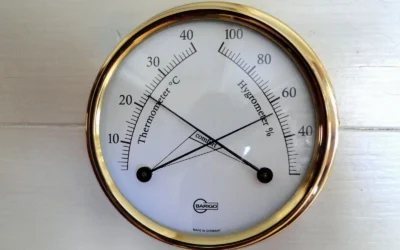
Your grow room sets the ceiling for what passive methods can do. Winter heating and summer air conditioning both strip moisture from the air, so a tub that held humidity fine in spring may dry out fast in November. A simple digital hygrometer at tub level helps you see those swings without guessing.
You can buffer the room without a humidifier by closing doors, moving grows away from direct sun and radiators, placing open tubs of water nearby, or hanging damp towels in a small closet grow. These tricks do not create tropical air, but they slow evaporation enough that your substrate water lasts longer. Growers commonly report that oysters and lions mane need a steadier room buffer than cubes to avoid dry edges.
Monitoring and Hands On Adjustments
Passive control lives or dies on observation. Check surface moisture morning and evening, lift the lid to feel the weight of humid air, and look for condensation patterns. If walls are bone dry by noon, tighten the chamber. If water drips and pools on the surface, crack it a bit more and pause any hand misting.
When you do hand mist, mist the walls and lid, not the mushrooms directly. Use a fine mister held high and let droplets settle softly. Heavy direct spraying bruises pins, invites blotch, and washes spores across the surface, which sets you back more than a slightly dry day would.
To show what powered control looks like when passive methods hit their limit, here are a few options that show the range from simple cool mist output to plug and play humidity switching. They are useful reference points even if you plan to stay manual for now.
This article contains affiliate links. If you buy through one of our links, FungiPop may earn a commission at no extra cost to you. Commissions never influence which products we recommend or how we rank them. Read our Affiliate Disclosure for details.
Quick Picks at a Glance

ROSEKM 4.5L Cool Mist Humidifier with Auto

Prime briidea MK-041 Humidity Controller
As an Amazon Associate we earn from qualifying purchases. Product prices and availability are accurate as of the date/time indicated.
Pros
- Long runtime from 4.5L tank reduces frequent refilling
- Very quiet performance and dark display mode work well for bedrooms and nurseries
- Auto humidity control maintains comfort without constant manual changes
- Filter-free design lowers ongoing maintenance cost and effort
- Low-water auto shutoff and timer add safety and convenience
Cons
- Bottom-fill tank must be flipped to refill which can drip or feel awkward
- Requires regular cleaning to prevent mineral buildup or musty odor
- Cool mist only, no warm mist option for those who prefer it
The ROSEKM KC-KM13S-4L is a 4.5L cool mist humidifier designed for bedrooms, nurseries, kids rooms and offices up to 430 square feet. It suits light sleepers, parents and plant owners who want steady humidity without constant adjustments.
Auto Mode uses a built in sensor to raise or lower mist output as room humidity changes. In daily use, the large tank runs up to 40 hours on low and 18 hours on high, while three mist levels, a 360 degree nozzle and a 1 to 12 hour timer make it easy to tailor coverage.
The unit measures just 6.81 inches square by 11.65 inches tall and weighs 2.7 pounds, so it fits easily on a nightstand or desk. Touch controls feel simple, the BPA free ABS body feels light yet sturdy, and the display turns off after 3 minutes to keep bedrooms dark.
There are tradeoffs to know. The bottom fill tank must be flipped to refill, which can drip, and like most cool mist models it needs regular cleaning to prevent film or odor. It also offers cool mist only, so it is not ideal if you specifically want warm mist.
Overall, this is a practical, low maintenance humidifier that balances large capacity, quiet operation under 26 dB and automatic control. If you want filter free upkeep, long runtime and sleep friendly performance, it is an easy recommendation.
Model: ROSEKM KC-KM13S-4L, Filter-Free Cool Mist Humidifier
Capacity and Coverage: 4.5L tank for rooms up to 430 sq ft
Runtime: Up to 40 hours on low, 18 hours on high
Controls: Touch control with 3 mist levels, Auto Mode and digital display
Noise Level: Below 26 dB with auto-off display for nighttime use
Timer and Safety: 1 to 12 hour timer plus low-water auto shutoff
Size and Power: 6.81 x 6.81 x 11.65 inches, 2.7 lbs, 18W corded electric
Pros
- Plug and play pre-wired design requires no wiring or batteries
- Accurate +/-3%RH sensor with calibration for precise humidity control
- Supports both humidification and dehumidification with auto on/off
- Delay protection, minimum run time and power-off memory protect equipment
- Large LCD and simple 3-button interface for easy monitoring
Cons
- Single outlet can only control one device in one mode at a time
- No WiFi, app control or remote monitoring for smart setups
- Alarm, calibration and mode settings take time to learn for beginners
The briidea MK-041 is a pre-wired digital humidistat designed to automate humidifiers and dehumidifiers in greenhouses, grow tents, mushroom setups and reptile enclosures. It switches your connected equipment on and off to hold your target humidity level without constant manual checks. It is ideal for hobby growers and home users who want simple, reliable climate control.
Standout performance comes from dual humidification and dehumidification modes plus manual and automatic operation. The high sensitivity sensor offers accuracy within +/-3 percent RH and supports calibration for fine tuning. High and low humidity alarms add peace of mind for unattended growing spaces.
Design is practical and user friendly with a large, bright LCD that shows current humidity and settings at a glance. Operation uses just three buttons, and the innovative piggyback plug lets you plug equipment directly into the back of the controller for a tidy setup. No wiring or batteries are required, so it is true plug and play.
There are a few limitations to consider for advanced setups. The single output controls either humidifying or dehumidifying at one time, not both simultaneously. It also lacks smart features like WiFi or app monitoring, and first time users may need a few minutes with the manual to master alarms and calibration.
Overall, the MK-041 delivers accurate, automated humidity control in a compact and convenient plug and play package. Build quality feels solid for daily use, and protection features like output delay and power off memory help protect connected gear. For greenhouse, tent and mushroom growers, it is a smart and practical upgrade.
Model: briidea MK-041 Humidity Controller, single outlet humidistat for humidifier or dehumidifier control.
Sensor Accuracy: +/-3 percent RH with calibration support, plus temperature sensing up to 70C with 0.3C accuracy.
Modes and Protection: Humidification and dehumidification modes, manual and auto operation, high and low alarms, output delay and power off memory.
Design: Black plug and play unit with large LCD display, 3-button control and piggyback plug, no batteries required.
Matching Gear to Your Grow
If you run one or two monotubs in a bedroom, you can often stay fully passive. Focus on a well hydrated bulk, a liner to prevent side evaporation, and adjustable air holes. Check twice daily and fine mist only the walls when the surface loses its sparkle. This style suits cubes and other forgiving varieties for first grows.
If your room air is very dry in winter or you work long shifts, a small cool mist unit used sparingly can back up your passive setup. The ROSEKM 4.5L Automatic Humidifier for Bedroom illustrates this backup role well, with a 4.5L tank that can run up to 40 hours on low or 18 hours on high, 3 mist levels, a 360 degree nozzle, and a 1-12 hour shut off timer. Its Auto Mode follows preset humidity levels using a built in sensor, and operation below 26 dB with a display that turns off after 3 minutes of inactivity makes it less disruptive for bedroom grows.
Use that kind of unit to humidify the room, not to blast the tub directly. Place it across the room, aim mist away from open tubs, and let the ambient air carry moisture gently. Direct fog on fresh pins keeps them wet for hours and raises the risk of bacterial blotch, which is a common reason bedroom grows stall.
If you run a Martha tent or small greenhouse with oysters or lions mane, on and off control matters more than raw mist output. The Humidity Controller, briidea Pre-Wired Humidistat shows how growers automate that switching, with humidification and dehumidification modes, manual and automatic modes, high or low humidity alarms, and accuracy rated at plus or minus 3 percent RH. Its piggyback plug lets you plug a small humidifier or fan into the back, while the large LCD screen and simple 3-button operation make set points easy to follow.
That controller style fits you if you want to keep a tent in a target band without babysitting it, especially when outdoor weather swings in November push your tent dry by day and damp by night. For help deciding when a tent actually needs powered mist, compare notes in martha tent humidifier vs BoomRoom II and in our Monotubs, Martha Tents & Fruiting Chambers collection.
Common Mistakes
Mistake one is placing a humidifier too close to a fresh flush and causing bacterial blotch. Cool fog looks gentle, but constant wet spots on caps invite yellow brown blotches, sour smells, and stalled pins. Keep powered mist in the room air or tent air stream, never aimed straight into an open tub.
Mistake two is sealing the tub airtight to save moisture and starving pins of oxygen. A tub with no exchange will stay damp, but pins will stretch, fuzz at the base, and abort. Open air holes gradually once pinning starts, even if you lose a little surface moisture, because steady gas exchange matters as much as damp air.
Mistake three is over misting to fix a dry substrate that was under hydrated at spawning. Spraying the surface cannot replace water missing through the whole bulk, and it creates a soggy top over a dry core. If your cake feels light and pulls from the walls early, soak or dunk on the next flush rather than drowning the current one with a spray bottle.
Who Should Wait or Buy Differently
A powered humidifier setup is not ideal for you if you only run a single small monotub in a stable bedroom, struggle with excess moisture and pooling already, or cannot clean a tank and tent on a regular schedule. In those cases, staying passive with better lid control, liners, and room placement will give you cleaner flushes with less contamination risk, and you should only step up to automated misting when your batch size, dry climate, or work schedule truly demands it.
Frequently Asked Questions
Can I fruit mushrooms with no humidifier at all?
Yes, many home growers fruit cubes and similar varieties with only a monotub, liner, and careful lid management. Success depends on starting with substrate at proper field capacity and keeping the chamber mostly closed until pins set. If your room is extremely dry, you may still need to buffer the room or add a small backup mister.
How do I know if my tub is too dry or too wet?
Look for a surface covered in fine beads with no large pools, plus light condensation on the walls. A dull, cracked, or shrinking surface that lightens in color usually needs more seal and light wall misting. Constant dripping, soggy patches, and smelly wet spots usually mean too much seal or too much direct misting.
When should I switch from passive methods to a controller?
Consider a switch when you move to a Martha tent, grow moisture hungry oysters, or cannot check your grow twice daily. A humidistat that turns gear on and off around your target band smooths out day and night swings. Start with the smallest effective output and keep sensors away from direct mist for steadier readings.






Write Your Review
No reviews yet. Be the first to share your experience!