

If you are learning how to control humidity without a humidifier for on a budget, you are really deciding how much moisture your grow can hold on its own, and how much help you actually need to buy. You can get steady pins with a well sealed tub, a hydrated substrate, and careful misting, but your margin for error depends on your species, your batch size, your budget, and your experience level. Oyster types that love fresh air dry out faster than many other grows, small shoebox grows forgive more than a large open space, and a beginner who works long hours needs a more forgiving setup than someone home to mist.
Think of this as a sliding scale from fully passive to lightly assisted. On one end you rely on field capacity substrate, closed lids, liners, and simple evaporation from damp perlite. On the other end you add a small cabinet unit only to stabilize a shelf or closet grow. For background on airflow and moisture balance, browse our humidity and FAE basics before you spend anything, then match your choice to the tub or tent you already own.
What Actually Matters
Chamber Seal and Moisture Reserve
Your first lever is how well your chamber holds the water you already put in. A tub with a snug lid, minimal gaps, and smooth walls will keep surface moisture longer than a leaky tote with warped corners. You want condensation as tiny beads on the walls and lid, not sheets running down, and a substrate that feels damp but not soggy when you press it. If you are using a bulk tub, review fruiting chamber options to see how lid style and volume change evaporation.
Liners and depth also stretch your reserve. A clean monotub liner hugs the substrate, reduces side pins, and slows drying from the edges where air sneaks in. Deeper substrate holds more water for the first flush, while a thin layer dries fast and forces you to mist often. You should aim to start at proper field capacity, where a squeezed handful holds together and releases only a few drops, so you are not trying to rescue a dry block later.
Fresh Air Exchange Balance Versus Moisture Loss
Humidity and fresh air pull in opposite directions, and budget growers feel that tradeoff most. Every time you fan, crack the lid, or open polyfill holes wider, you bring in oxygen and release carbon dioxide, but you also let humid air escape. Species that need high air exchange will dry your surface faster, so you need a routine that adds air in short bursts rather than leaving the tub wide open all day. Watch stem shape and cap development, since long fuzzy stems often point to stale air, while cracked caps and stalled pins often point to dry air.
You can tune this without buying anything. Start with holes stuffed lightly, then loosen them a little at a time until you see light evaporation from the surface between mistings. Flip the lid for a small gap during the day and close it more at night if your room air is dry. Keep tubs away from heaters, direct sun, and fans that blow across the surface, because moving room air strips moisture far faster than still air in a closet or corner.
Monitoring You Can Read Without Opening the Lid
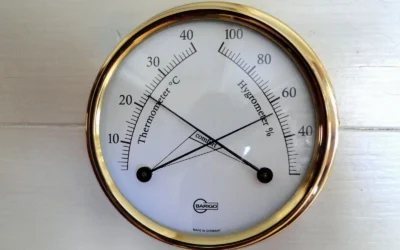
You cannot manage what you cannot see, and opening the lid every hour defeats passive humidity. A simple hygrometer placed near substrate level tells you far more than guessing from wall condensation alone. You want a display you can read through the tub wall or with a quick glance, so you avoid dumping all your humid air just to check a number. Place the sensor away from direct mist and away from walls where water pools, or your readings will swing wildly.
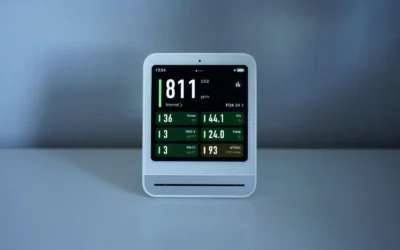
Look for stable trends rather than chasing a single perfect number. If readings fall steadily through the afternoon and surface beads vanish, you need less air exchange or more frequent light misting. If readings stay pegged high with no evaporation and water pools on the surface, you need more air exchange and a pause on misting. A clear LCD that shows current temperature, current humidity, and your preset at a glance makes this learning curve much easier for beginners.
Room Climate and Seasonal Swings
Your room is part of your fruiting chamber, especially on a budget. Winter heating and summer air conditioning both dry indoor air, and a tub in a drafty living room will behave very differently from the same tub in a small closet. Basements often hold moisture better but run cool, while upstairs bedrooms run warm and dry. You should track where your grow sits during the day, not just at setup, because afternoon heat can erase morning humidity gains.
This is where you decide between staying fully passive or adding light assistance. If your ambient air is moderately humid and you are home to mist, passive tubs plus perlite or damp towels in the room can be enough. If your apartment runs very dry, you work long shifts, or you fruit in a small cabinet that loses moisture fast, a compact unit with adjustable humidity settings and even air circulation can reduce daily swings. For larger tent ideas, compare notes in our Martha tent humidifier comparison before scaling up.
To see how these ideas translate into gear, here are a few options that show the range from passive friendly monitoring to compact assisted control for small cabinets.
This article contains affiliate links. If you buy through one of our links, FungiPop may earn a commission at no extra cost to you. Commissions never influence which products we recommend or how we rank them. Read our Affiliate Disclosure for details.
Quick Picks at a Glance

Briidea Electric Cabinet Humidifier for 8 Cu Ft

Briidea MK-204 Electric Cabinet Humidifier for 1-8
As an Amazon Associate we earn from qualifying purchases. Product prices and availability are accurate as of the date/time indicated.
Pros
- Wide 20% to 90% adjustable range for precise preservation
- Automatic fan activation keeps humidity stable without manual checks
- Clear LCD display reduces need to open the cabinet
- Quiet operation suitable for living spaces and bedrooms
- Memory function restores settings after power outage
Cons
- Designed only for cabinets around 8 cu ft, not for larger rooms
- Requires distilled or purified water and regular refills to maintain performance
- Compact top center placement is needed for best airflow and even coverage
The Briidea Electric Humidifier for Cabinet is built for collectors storing up to 300 pieces in an 8 cu ft cabinet. It is ideal for anyone who wants stable, hands off humidity without daily monitoring or manual packs.
Standout performance comes from its adjustable 20% to 90% RH range with automatic fan activation when levels drop. The fan plus moisture beads distribute humidity evenly while helping reduce odors, and the low water beep helps prevent unwanted swings.
The compact black unit measures 2 x 3 x 6 inches and is designed for top center placement for best circulation. The smart LCD clearly shows current temperature, current humidity and your preset, so you can check status from a distance without opening the door.
It is not a room humidifier and coverage is limited to smaller cabinets, so placement matters for even results. You will need distilled or purified water only, plus regular refills, as tap water could affect performance.
Overall, this is a strong set and forget upgrade for cabinet storage where consistency matters. If you value precise control, quiet operation and real time display in one compact unit, it is easy to recommend.
Brand: briidea, Compatibility: Cabinets up to 8 cu ft for up to 300 count storage.
Humidity Range: Adjustable 20% to 90% RH with automatic fan control for stable conditions.
Display: Smart LCD with real time temperature, current humidity and preset level.
Design: Compact black unit, 2 x 3 x 6 inches, for top center cabinet placement.
Power and Care: 6 ft 12V adapter with no drilling or batteries, use distilled or purified water only.
Pros
- Holds target humidity accurately in small humidors and wine fridge conversions
- Easy to install and set with clear LCD display and long sensor cable
- Even air circulation helps maintain consistent humidity throughout the cabinet
- Compact footprint fits neatly at the top center of enclosed cabinets
Cons
- Fan power feels weak for larger cabinets near 8 cubic feet
- Controller can cycle on and off frequently right at the set point
- Replacement beads are hard to source for long term maintenance
The Briidea MK-204 is a compact electric humidifier designed for enclosed cabinets from 1 to 8 cubic feet. It is ideal for cigar humidors, converted wine fridges, display cases and small storage cabinets where stable humidity matters.
Its standout feature is adjustable humidity from 30 percent to 80 percent RH with live temperature and humidity monitoring. In real world use, owners report it holds 70 percent RH steadily in humidors and wine fridge conversions after easy setup.
The unit uses expandable beads with distilled water plus a small circulation fan to spread moisture evenly. The upgraded LCD display is easy to read from a distance, and the 6 foot extension cord gives flexible mounting at the top center of the cabinet.
Performance is best in small to mid size cabinets, as the fan feels weak at the upper end of the range. The controller can also toggle frequently right at the set point, which may add wear over time, and replacement beads are not easy to find.
Overall, the MK-204 is a practical set and forget solution for collectors who want precise small cabinet control without manual trays. If you need steady humidity for cigars or valuables in a compact cabinet, it is a solid fit despite minor control quirks.
Model: Briidea MK-204, Capacity: 1 to 8 cubic feet, Humidity Range: 30 percent to 80 percent RH.
Display: Smart LCD for temperature, humidity and set point, Power: 12V adapter with 6 foot extension cord.
Dimensions: 7.6W x 5.5D x 3.5H inches, Material: Plastic, Color: Black and White, Operation: Manual mode with Auto Shut Off.
Use With: Distilled or purified water only, Recommended Placement: Top center of cabinet, Warranty: 2 years included.
Matching Gear to Your Grow
Scenario one: single shoebox or small monotub, tight budget, home often. Stay passive and spend your effort on seal and routine. Use a liner, bring substrate to field capacity at spawning, keep the lid closed except for brief air exchanges, and mist the walls and lid rather than the pins. You do not need assisted humidity here, and adding a powered unit would only raise complexity and cleaning. Your best upgrade is a reliable hygrometer and a consistent schedule you can actually keep.
Scenario two: closet shelf with a few small tubs in dry apartment air. You are away for work and come home to dry walls and shrinking surface moisture. This is where Briidea Electric Humidifier for Cabinet illustrates the assisted approach. It is designed for cabinets up to 8 cubic feet with adjustable 20 percent to 90 percent RH, quiet operation, and a smart LCD that shows current temperature, humidity, and preset levels. It mounts at the top center, runs on a 12V adapter with 6 ft cord, uses distilled or purified water with expandable beads, and adds a fan for even distribution plus a low water beep and power off memory. The con is real: it is made for enclosed cabinets, not open rooms or large tents, and you must still clean the tank and keep mist off direct pins.
Scenario three: small enclosed cabinet from 1 to 8 cubic feet for steady microclimate. You want less daily misting and a display you can read without opening the door. Briidea Electric Humidifiers for Cabinet shows that style, with freely set humidity from 30 percent RH to 80 percent RH, real time monitoring, and a fan between sensor and control unit to spread moisture evenly. It also uses expandable beads with distilled or purified water only, mounts at the top center, and runs on a 12V adapter with 6 foot extension cord. The tradeoff is narrower control range than the unit above and a smaller water reserve than a tent humidifier, so it suits one cabinet, not a whole grow room, and it still needs regular refills and wipe downs to avoid mineral film.
Common Mistakes
Misting the mushrooms instead of the chamber. Spraying pins directly leaves standing water on caps, which can invite bacterial blotch, yellowing, and stalled growth. Mist the walls and lid from a distance, let fine droplets settle, then close the lid. If you see pooling on the surface, pause misting and give more air exchange until the sheen turns back into tiny beads.
Sealing up air exchange to save moisture. Closing every hole keeps humidity high but starves the grow of oxygen, leading to fuzzy feet, skinny stems, and weak flushes. You need light evaporation plus fresh air, not a swamp with no airflow. Open gradually, fan briefly with clean hands, and keep the humidifier or passive moisture source away from a direct blast onto a fresh flush.
Using tap water in beads, tanks, or mist bottles. Minerals leave white dust, coat sensors, and reduce even humidity distribution over time. Both example cabinet units call for distilled or purified water only, and the same habit helps hand misting. Rinse reservoirs often, replace beads when they look tired, and avoid letting water sit for days in a warm cabinet.
Who Should Wait or Buy Differently
If you only run one small tub in a naturally humid room and you are home to check it, a powered cabinet unit is not ideal for your setup right now, and your money is better spent on liners, a good sprayer, and a hygrometer. Likewise, if you plan to move soon to a large Martha tent or an open rack in a dry garage, these compact 1 to 8 cubic feet cabinet units are not a good fit for that volume, so wait and size your humidity plan to the final space rather than buying twice.
Frequently Asked Questions
Can I fruit mushrooms with no humidifier at all?
Yes, many small tub grows fruit fine with passive humidity from properly hydrated substrate, a snug lid, and light hand misting. You will need to check surface moisture daily and adjust air exchange as pins form. If your room air is very dry or you are away often, passive control becomes harder to sustain.
How do I know passive control is failing?
Look for disappearing wall condensation by midday, a dull or cracked surface, and pins that stall or abort after forming. Fuzzy feet with high moisture usually means low air exchange, while dry caps with low readings usually means too much air exchange. Adjust one variable at a time so you learn what helped.
When is a small cabinet humidifier worth it on a budget?
It can be worth it when you fruit in an enclosed cabinet up to 8 cubic feet in a dry room and cannot mist on schedule. An adjustable range, clear display, and even fan circulation reduce swings between visits. It is less useful for a single shoebox or for a large open tent where the volume overwhelms the output.






Write Your Review
No reviews yet. Be the first to share your experience!