
You lift your liquid culture jar to the light and expect translucent amber broth with soft, cloudy white wisps drifting inside. Instead you see milky haze, yellow green tints or tiny dots that never develop into fluffy mycelium. This 2026 focused guide on how to tell if mushroom liquid culture is contaminated walks you through those visual and smell clues before you waste grain or grow bags.
You will learn what healthy mycelium should look like, which changes point to bacteria or mold, and which reference books explain sterile method in plain language. If you already work with all in one 3lb grow bags, catching a bad syringe early can save weeks of waiting and a full block. This guide is for home growers using jars, syringes and spawn bags who want clear, confident next steps.
This article contains affiliate links. If you buy through one of our links, FungiPop may earn a commission at no extra cost to you. Commissions never influence which products we recommend or how we rank them. Read our Affiliate Disclosure for details.
Quick Picks at a Glance

Prime How to Forage for Mushrooms without Dying
Prime Mushrooms: How to Identify and Gather Wild

Prime Growing Gourmet and Medicinal Mushrooms by Paul

Prime Mushrooms of the Northwest Field Guide

Prime How to Grow Psilocybin Mushrooms at Home

Prime Mushrooming with Confidence

Prime Essential Guide to Cultivating Mushrooms at Home

Prime Mushrooming Without Fear
As an Amazon Associate we earn from qualifying purchases. Product prices and availability are accurate as of the date/time indicated.
Pros
- Perfectly tailored for absolute beginners with no prior mycology background
- Photographic, plain language approach makes field identification faster and less stressful
- Strong safety first focus builds confidence while respecting real risks
- Compact and portable format works well as a trail companion
Cons
- Covers only 29 species, so experienced foragers will need a more comprehensive reference
- Compact trim size means photos and text can feel small for detailed study at home
- Not a deep scientific textbook, so readers wanting taxonomy and advanced keys may want more
How to Forage for Mushrooms without Dying by Frank Hyman is an accessible photographic guide built specifically for absolute beginners. It focuses on just the 29 wild edible mushrooms you are most likely to find, making it ideal for hikers, campers and curious cooks who want a safe start.
The standout strength is Hyman's folksy, memorable teaching style that turns safety checks into easy field rules. His slice test for morels and clear comparisons to toxic false morels and other lookalikes help you make confident decisions quickly outdoors.
At 256 pages with full color photos, the Storey Publishing paperback feels sturdy yet portable for a backpack or tote. The compact 5.5 by 6.95 inch trim and clear layout make it easy to flip to a species while on the trail.
The narrow focus is both a benefit and a limit, since seasoned foragers will outgrow 29 species quickly. Readers wanting deep mycology, microscopy or extensive keys will also find this intentionally simple and will need a second reference.
Overall, this is one of the friendliest entry points into mushroom foraging with a strong safety mindset. If you walk in the woods and want to learn what you can safely eat without getting overwhelmed, this is the guide to buy first.
Publisher: Storey Publishing, LLC, Publication Date: October 5, 2021. Language: English with 256 pages of photographic instruction.
ISBN-10: 1635863325, ISBN-13: 978-1635863321. Trim size: 5.5 x 0.8 x 6.95 inches with a portable paperback format.
Category strength in Foraging, Mushrooms in Biological Sciences and Biology reflects strong reader trust for beginner use.
Pros
- Extensive coverage of 450 plus species with high quality photos and annotations
- Easy to use visual keys and charts that simplify identification for beginners
- Strong focus on safety with clear edible versus poisonous distinctions
- Durable, beautifully illustrated DK format built for long term reference
Cons
- Bulky 2.64 pound size is better for home study than carrying in the field
- 2013 publication means some names and taxonomy may be dated
- Advanced microscopic species sections may overwhelm absolute beginners
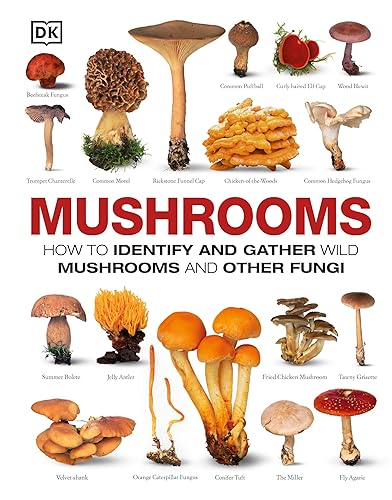
DKs Mushrooms: How to Identify and Gather Wild Mushrooms and Other Fungi is a comprehensive 360 page reference covering over 450 species from around the world. It is built for curious beginners, hobby foragers, and experienced mycologists who want a reliable visual identification system.
Real world performance centers on visual identification, with clear photographs, cross sections, scale illustrations and ID charts for every entry. You learn to assess caps, stems, gills, texture and color, plus habitat and fruiting details to distinguish edible species from poisonous lookalikes.
The DK design is large, colorful and highly organized, with annotated images and anatomical breakdowns that make complex fungi easy to understand. At 7.5 x 9.5 inches with solid construction, it feels like a durable home library reference rather than a pocket field manual.
The main drawback is portability, as the size and weight make it better for study at home than carrying on the trail. Some taxonomy reflects its 2013 publication date, so serious hunters should cross check local regulations and recent guides for updates.
Overall, this is one of the best visual mushroom guides for building confidence and safety knowledge before you forage. If you want an authoritative, beautifully illustrated book to identify fungi accurately, this DK edition is an excellent pick.
Publisher: DK, Publication Date: July 15, 2013, Language: English, Print Length: 360 pages.
ISBN-10: 146540855X, ISBN-13: 978-1465408556, Dimensions: 7.5 x 1.11 x 9.5 inches, Weight: 2.64 pounds.
Category Ranking: Number 2 in Mushrooms in Biological Sciences and Number 11 in Outdoors and Nature Reference, ideal as a home reference and study guide.
Use this book as a study tool before you head out, focusing on poisonous lookalikes in your region and key cap, gill and stem traits. Compare multiple photos, cross sections and habitat notes rather than relying on a single image.
This guide is best for learners who want visual confidence and foundational mycology knowledge. Pair it with a local foraging group, regional checklist and expert confirmation before consuming any wild mushrooms.
Pros
- Comprehensive coverage of 31 species makes it a true one-book reference for beginners and experienced growers
- Highly visual format with hundreds of photos and charts simplifies complex sterile technique and cultivation steps
- Covers the full process from lab setup and spawn to harvest, recipes and troubleshooting
- Written by trusted mycologist Paul Stamets with decades of practical cultivation experience
Cons
- Large 592-page format and technical depth can feel overwhelming for complete beginners
- 2000 third edition lacks coverage of newer strains, modern equipment and current suppliers
- Heavy 3-pound paperback works best as a home bench reference rather than a portable field guide
Growing Gourmet and Medicinal Mushrooms by Paul Stamets is a 592-page comprehensive handbook for cultivating 31 gourmet and medicinal species at home or commercially. It serves ecologists, chefs, foragers, home gardeners and commercial growers who want clear, science based instruction in one place.
The book stands out for its precise growth parameters for each species, covering substrates, temperature, humidity and fruiting conditions. Readers get state-of-the-art production methods, lab and grow room construction plans, plus gardening tips and recipes that translate theory into real harvests.
Published by Ten Speed Press in a large illustrated format, the guide includes more than 500 photographs, illustrations and charts plus a 24-page color insert. The layout makes sterile technique, spawn expansion and troubleshooting easy to follow, even across complex multi-stage processes.
The depth that makes it authoritative can intimidate absolute beginners, and some equipment references reflect its 2000 publication date. Its size and weight also make it a bench reference rather than a pocket field guide, so new growers may want to start with one or two species.
Overall, this is the definitive cultivation manual for anyone serious about gourmet and medicinal mushrooms. If you want to build a productive home setup or scale toward commercial growing, this book delivers the knowledge, confidence and visual guidance to succeed.
Publisher: Ten Speed Press, 3rd Revised Edition published October 25, 2000. Language: English with 592 pages of instruction, photos and charts.
ISBN-10: 1580081754, ISBN-13: 978-1580081757. Category focus includes Mushrooms, Landscape and Garden Design books.
Dimensions: 7.52 x 1.54 x 9.02 inches with a weight of 3.05 pounds. Large paperback format designed for bench reference and study.
Pros
- Smart visual organization by shape and color speeds up identification
- Accessible for beginners yet useful for experienced mushroom seekers
- Lightweight, portable format built for real field use
- Clear safety focus with edible versus toxic highlights
Cons
- Limited to Northwest states, not useful for foraging in other regions
- Lacks advanced microscopy and spore detail that experts may want
- Compact size means text and photos can feel small for some readers
Mushrooms of the Northwest by Teresa Marrone and Drew Parker is a region specific field guide covering more than 400 common species in Idaho, Oregon and Washington. It is built for beginners who want a simple visual way to start identifying wild mushrooms with confidence.
The standout system organizes mushrooms by shape, then by color, so you can match what you find without botanical jargon. Hundreds of full color photos pair with clear text, plus dedicated Top Edibles and Top Toxics sections that support safer, faster decisions in the field.
At 296 pages and just 4.5 by 6 inches, the Illustrated Adventure Publications edition is truly pack friendly. The layout is clean, photos are sharp, and descriptions stay plain language while still useful for more experienced seekers.
The tradeoff is scope. Coverage is limited to the Northwest, so it will not help much outside those three states. Serious mycologists may also want more technical detail on spores, microscopy and lookalikes.
For Northwest beginners and casual foragers, this is one of the easiest and most practical guides to start with. It simplifies identification, emphasizes safety, and earns its place in your foraging kit.
Publisher: Adventure Publications, Illustrated edition published March 12, 2019.
Print length: 296 pages, Language: English, ISBN 13: 978-1591937920.
Size: 4.5 x 0.75 x 6 inches, Weight: 9.6 ounces, Series: Mushroom Guides.
Coverage: More than 400 species from Morels to Shelf Mushrooms found in Idaho, Oregon and Washington.
Start with shape, then narrow by color to quickly match your find to the right section.
Always cross check the Top Edibles and Top Toxics pages before considering any wild mushroom as food.
Use this book as a field starter and confirm uncertain IDs with a local mycological club or expert.
Pros
- Clear, friendly and beginner focused writing without overwhelming mycology jargon
- Comprehensive coverage from setup to harvest, including advanced agar and cloning topics
- Practical real world help with spore sourcing tips, harvesting, storage and troubleshooting
- Includes wellness, mindset and science background plus dosing and safety guidance
Cons
- Cultivation is legally restricted in many areas, so readers must verify local laws first
- Experienced growers may want more depth, photos or lab level detail than an intro guide provides
- Visual steps like agar work and inoculation are easier to follow in print than in audio format
This book by Bil Harret is an introductory cultivation guide focused on growing psilocybin mushrooms at home for absolute beginners. It is aimed at curious newcomers, microdosing enthusiasts and anyone interested in the medicinal and wellness side of psilocybin.
Its standout feature is coverage of five home growing methods with condensed, step by step guidance on spores, spore syringes, liquid culture, outdoor grows and harvesting. Readers report successful first grows with multiple flushes after struggling with scattered videos and grow kits, which speaks to its real world clarity.
In terms of design, the 174 page paperback is organized for easy reading with plain language instead of dense mycology jargon. The friendly, authoritative tone walks you through life cycle, habitat, cloning, agar transfers and storage without feeling overwhelming.
The main drawback is scope and legality. Advanced growers may outgrow the basics quickly and want more visuals or lab level detail, and cultivation remains legally restricted in many places so local laws must be checked first.
Overall, this is one of the clearest beginner entry points to magic mushroom cultivation with practical troubleshooting plus a bonus on neuroscience, dosing and safety. If you want a single, confidence building starting guide, this is highly recommended.
Title: How to Grow Psilocybin Mushrooms at Home for Beginners, Book 2 of 6 in the Medicinal Mushrooms series by Bil Harret.
Publisher: Inspirational Creator. Publication date: January 31, 2023. Language: English. Print length: 174 pages.
ISBN-10: 1922940127. ISBN-13: 978-1922940124. Dimensions: 5 x 0.4 x 8 inches. Weight: 6.9 ounces.
Category: Propagation and Cultivation Gardening, with rankings in Shade Gardening and Agronomy.
Pros
- Safety first system with checklists builds real confidence for beginners
- Highly visual layout with hundreds of color photos for accurate matching
- Curated list of tasty species avoids information overload
- Covers useful techniques for picking, handling and preparing finds
- Fun, accessible tone that works well for family foraging
Cons
- Limited to 30 species, so not a comprehensive mycology reference
- 2012 first edition may not reflect the newest taxonomy changes
- Large 7.5 x 9.75 inch trim size is less pocket friendly than compact field guides
Mushrooming with Confidence by Alexander Schwab is a slim, beginner friendly guide to collecting edible wild mushrooms safely. It is designed for families, novices, and experienced pickers who want tasty finds without sorting through thousands of species.
The book organizes mushrooms into four identification categories and profiles 30 common, delicious species in detail. Each profile includes a Positive ID Checklist and clear color photos, so you can verify key traits quickly in the woods.
With more than 300 color photographs and a clean layout, visual matching is fast and intuitive even for first timers. The 176 page softcover is sturdy enough for a field bag while staying light and easy to carry on day hikes.
The focused approach is also its main limit, since it covers only 30 species and is not a full mycology reference. As a 2012 first edition, some names may feel dated, and the large trim size is not ideal for a jacket pocket.
For safe, enjoyable foraging of the most rewarding edible mushrooms, this guide hits the sweet spot between simplicity and confidence. If you want a practical, visual starter manual that prioritizes safety and cooking enjoyment, it is an excellent pick.
Publisher: Skyhorse Publishing, 1st Edition published November 13, 2012, Language: English
Print Length: 176 pages, ISBN-10: 9781620871959, ISBN-13: 978-1620871959
Dimensions: 7.5 x 0.7 x 9.75 inches, Weight: 1.45 pounds, Format: Softcover illustrated manual
Categories: Mushrooms in Biological Sciences, Sustainable Agriculture, Outdoors and Nature Reference
Start with the four identification categories to narrow down what you found, then compare photos and details carefully. Always work through the full Positive ID Checklist before picking any mushroom for eating.
Bring proper tools, extract mushrooms cleanly in one piece, and check for worms as shown in the guide. When in doubt, leave it out and confirm with a local expert or mycological club.
This book is best used as a focused introduction to tasty common species, paired with local knowledge for your region and season.
Pros
- Covers full skill range from starter kits to grain spawn and fruiting chambers
- Teaches five in-demand gourmet mushrooms for home cooking
- Beginner friendly structure that also supports small market growers
- Kindle edition offers enhanced typesetting, Page Flip and Screen Reader support
Cons
- First published in 2014, so photos and gear references may feel dated
- Large 57.8 MB file size requires extra storage space on older devices
- X-Ray and Word Wise are not enabled, which limits quick reference features
The Essential Guide to Cultivating Mushrooms by Stephen Russell is a practical manual for growing gourmet mushrooms at home. It is aimed at kitchen gardeners, food lovers and beginners curious about sustainable agriculture and small market growing.
The book moves logically from easy mushroom kits to grain spawn, liquid cultures and fruiting chambers. Readers learn to produce shiitake, oyster, lion's mane, maitake and portobello with clear steps that support steady, real world harvests.
As a Kindle edition, it offers 233 pages with enhanced typesetting, Page Flip and Screen Reader support for smooth reading. The layout is instructional and easy to follow, though the large file reflects rich images and detailed guidance.
The main limitation is age, since original publication in 2014 means some equipment and suppliers have changed. Lack of X-Ray and Word Wise also makes it less quick to navigate for readers who rely on those study tools.
Overall, this is a solid, approachable choice for anyone starting home mushroom cultivation. If you want one guide to take you from first kit to confident indoor grower, it delivers lasting value.
Publisher: Storey Publishing, LLC, Publication Date: September 15, 2014, Language: English, Print Length: 233 pages.
Kindle Features: Enhanced typesetting enabled, Screen Reader supported, Page Flip enabled, File size 57.8 MB.
Category: Sustainable Agriculture, Gardening House Plants and Vegetable Gardening, ASIN B00GU2RIRA.
Pros
- Safety focused approach ideal for first time foragers
- Clear photos and checklists make identification faster and easier
- Covers only delicious edible species with cooking and storage tips
- Compact, easy to follow format from a recognized expert
Cons
- Limited species coverage, not a complete reference for advanced foraging
- Printed in 2007, so some names and taxonomy may feel dated
- Conservative gill avoidance rule excludes many edibles experienced hunters enjoy
Mushrooming Without Fear by Alexander Schwab is a 128-page starter guide built specifically for nervous beginners. It is ideal for nature lovers and food fans who want to forage tasty wild mushrooms without second guessing safety.
The core strength is its safety first approach with eight clear gathering rules, including avoiding gilled mushrooms and trusting smell. Each featured species like cep, chanterelle, hedgehog fungus and hen of the woods gets multiple photos plus a quick identification checklist.
The layout is practical for field use with clear photos, checklists and sections on season, handling and storage. At 7.44 by 9.65 inches and 128 pages, it is large enough to see details clearly yet light enough to carry in a day pack.
The narrow focus means you will not learn dozens of species, and experienced foragers may want a more comprehensive regional guide. Some taxonomy and names reflect its 2007 publication date, so pairing it with a current local resource is smart.
For beginners who value confidence over completeness, this is an excellent first foraging book. It teaches safe habits, highlights truly delicious species, and adds cooking and storage advice with recipes to enjoy your harvest.
Publisher: Skyhorse, published October 17, 2007. Language: English, Print length: 128 pages.
ISBN-10: 1602391602, ISBN-13: 978-1602391604. Size: 7.44 x 0.5 x 9.65 inches, Weight: 1.05 pounds.
Category focus: Sustainable Agriculture, Mushrooms in Biological Sciences, Outdoors and Nature Reference with recipes and storage guidance.
Buying Guide
We evaluated each book for photo clarity, sterile workflow detail and practical troubleshooting so you can match it to your setup. Our focus is on resources that help you interpret what you see in the jar and decide whether to keep, isolate or discard. Use the notes below to pick one in depth manual plus one quick visual companion.
Clarity of Photos Showing Healthy Versus Contaminated Growth
Good photos make the difference between guessing and knowing. Mushrooms: How to Identify and Gather Wild from DK offers sharp, well lit images that train your eye for texture, color and structure, while Mushrooms of the Northwest gives region specific examples that help you recognize abnormal hues and surface films. Look for books that contrast clean white mycelium with bacterial cloudiness, yeast sediment and green or black mold.
Clear visuals also help you describe problems accurately when you ask for help in November. Pair your reading with the FreshCap vs north spore grow bag to see how clean spawn should perform once it leaves the jar. If your culture looks uniformly milky, has floating blobs that break apart or leaves a film on the glass, set it aside and do not inoculate with it.
Depth on Sterile Liquid Culture Method and Inoculation Hygiene
A strong manual explains sugar broth ratios, sterilization times, inoculation ports, airflow and storage without vague advice. Growing Gourmet and Medicinal Mushrooms by Paul Stamets remains the most thorough reference for growth parameters and contamination management across many species. The Essential Guide to Cultivating Mushrooms by Stephen Russell adds approachable steps for grain spawn, liquid cultures and fruiting chambers that suit shiitake, oyster, lion’s mane and maitake growers.
Focus on chapters about still air work, glove hygiene, needle flame sterilization and agar verification. Your goal is broth that stays mostly clear with small, jellyfish like clouds that expand slowly over days. For context on what happens after inoculation, review spawn bag workflows so you know how healthy mycelium should run through grain in 2026.
Troubleshooting Help for Spawn Bags, Grain and Fruiting Blocks
Even with careful work, jars can turn. How to Grow Psilocybin Mushrooms at Home outlines five home methods with attention to sanitation checkpoints, while Mushrooming with Confidence groups fungi into recognition categories that sharpen your observation skills. Use troubleshooting tables to match symptoms like sour or fermented odor, excess turbidity, stalled wisps or colorful specks to likely bacterial or mold issues.
Do not open a suspect jar near open grain or fruiting areas, and avoid shaking it aggressively if you see pressure buildup. If you use bags, the notes on king oyster grow bag in a monotub show how quickly a contaminated inoculant can spread through bulk substrate. When in doubt, keep the jar sealed, isolate it and review your sterile steps before starting fresh.
Match to Your Skill Level and Growing Goals
Beginners benefit from simple language and safety first framing. How to Forage for Mushrooms without Dying by Frank Hyman keeps identification cautious and visual, which builds the same careful habit you need when inspecting broth. Mushrooming Without Fear offers a compact introduction to safe, delicious types with photos that reinforce disciplined observation for new foragers and growers.
Advanced growers may prefer encyclopedic depth and parameter charts you can revisit all season. Explore the Grow Bags, Spawn Bags and Liquid Culture hub to align your book choice with your current vessel, whether that is a pint jar, syringe or full spawn bag. Choose one comprehensive manual for the shelf and one portable field guide for quick checks under good light.
Final Thoughts
For most home growers, start with Growing Gourmet and Medicinal Mushrooms for deep sterile method plus The Essential Guide to Cultivating Mushrooms for clear, species specific steps you can apply on your next inoculation day.
Frequently Asked Questions
What does healthy mushroom liquid culture look like?
Healthy liquid culture in 2026 home setups is usually clear to light amber with loose, white, cloud like wisps or a small jellyfish puff that slowly expands. You should see defined mycelium strands rather than uniform milkiness or thick sediment. Gentle swirling should move the mass as one soft cloud without leaving a slimy film on the glass.
Can cloudy liquid culture still be good?
Uniform cloudiness that never forms distinct wisps often points to bacteria, especially if it appears within a day or two after inoculation. Yeast can create grainy sediment or a slick layer, while mold often shows as green, black or grey dots floating at the surface. If the broth stays opaque and growth stalls, discard the jar rather than risking grain.
What smells indicate bacterial contamination?
Fresh mycelium broth smells faintly sweet, earthy or almost neutral. Sour, fermented, rotten egg or strong alcohol odors suggest bacterial activity and mean you should not open the jar near clean work. Keep it sealed, isolate it from your grow area and start fresh with verified sterile method.
Should you check a suspect jar on agar before using it?
Yes, moving a tiny drop to agar is the most reliable way to confirm what is in the jar without wasting a full bag. Clean mycelium grows as even white fans, while bacteria show as slimy dots and mold spreads as fuzzy colored colonies. Once you have clean spawn, maintain proper humidity with tools like a humidity dome for indoor fruiting to keep young mycelium vigorous in 2026.
This roundup is not a good fit if you are already set up with bulk grain and jars; a pre-made grow bag mainly saves prep time and is aimed at growers who want a simpler starting point.

Write Your Review
No reviews yet. Be the first to share your experience!