

If you open your cooker to find puddles at the bottom of spawn bags, damp clumps, or swollen grains that smear starch, you are seeing classic wet spots. Learning how to avoid wet spots after pressure cooking spawn for indoor grow setups is less about one magic product and more about matching grain prep, bag choice, and cooldown to your routine.
Before you change gear, think through your main variables. The species you grow affects how much airflow you want, your batch size affects bag size, and your budget and experience level affect whether thicker bags or simpler prep changes help most. For background, browse our Sterilization and Pasteurization basics to see how spawn sterilization fits the full workflow.
What Actually Matters
Grain Hydration Comes First
Most wet spots start before the cooker, not inside it. Surface water left on grain turns to free moisture during sterilization, then pools at seams and in the bottom gusset. You want grains that are hydrated inside but dry to the touch outside, with no shiny film and no water beading on your hands.
To get there, rinse well, hydrate evenly, then drain thoroughly and let steam escape. Growers commonly report soaking overnight, simmering briefly until a few grains just start to swell, then spreading grain to air dry. Shake the tray or colander often and do a paper towel check, if it leaves a damp mark, keep drying.
Burst grains are another warning sign. When kernels split and release starch, they create sticky wet patches that resist colonization and invite bacteria. If you see many burst or mushy grains, shorten your simmer next time, drain longer, and avoid packing grain while it is still warm and steamy.
Bag Thickness, Size and Filter Choice
Bag film affects how well your spawn survives handling and how moisture moves. In the examples below you will see film described as 0.08mm versus standard 0.06mm, with claims of 30% thicker walls, and other bags listed at 80 micron which equals 3 Mil. Thicker film resists micro tears, punctures at folds, and pinholes that can wick moisture.
Size shapes moisture too. Common spawn sizes include 8 x 5 x 20 Inch, 6 X 5 X 20 Inch, and 8 X 5 X 19 Inch, with larger bags noted to hold 4.4 to 5.5 lbs or 2 to 2.5 kg of substrate. A bag that is too large for your load can trap humid air pockets, while an overfilled bag restricts steam penetration and leaves damp cores.
Filter rating controls gas exchange and humidity loss. A 0.2 micron filter patch offers finer filtration than a 0.5 micron patch, which can help reduce contamination risk while still allowing CO2 out and oxygen in. Clear bags also help you spot uneven moisture and early contamination without opening the bag and adding risk.
Loading and Running the Cooker
How you place bags matters as much as how long you process them. Growers commonly report filling bags about halfway to two thirds full to leave headspace for steam and expansion. Keep filter patches dry and above any water line, fold gussets neatly, and avoid pressing sharp grain corners into the film. For setup help, review pressure cooker basics for mushrooms before you load a full batch.
One example in the data is rated autoclavable up to 250F or 121C at 15 PSI for 90 to 120 minutes, which shows the range household and commercial units aim for. Always follow the manufacturer’s own instructions for your specific unit, never leave it unattended while pressurized, and let the pressure release naturally before opening the lid. Venting and cooling too fast can suck unfiltered air in and leave condensation.
Avoid stacking bags tightly or letting them touch cooker walls where they can scorch or trap water. Use a rack or cloth barrier if your unit runs hot on the bottom, keep bags upright when possible, and leave space for steam to circulate. Even heat means more even moisture and fewer soggy bottoms.
Cooling and Checking for Moisture
Cool down is where many wet spots appear. Leave bags sealed and upright in the cooker until they are comfortable to handle, then move them to a clean, draft free surface. Do not squeeze, shake, or stack hot bags, since warm film stretches easily and trapped steam will condense into pools.
In November 2026, many indoor growers check bags the next morning under good light. Look for clear water pooling, dark damp clumps, or sour odors near the filter. A light, even haze that redistributes after gentle tapping is different from standing water at the seams, which points to overhydration or overfilling.
Below are a few options that show the range from thicker filtered bags to value packs for larger projects.
This article contains affiliate links. If you buy through one of our links, FungiPop may earn a commission at no extra cost to you. Commissions never influence which products we recommend or how we rank them. Read our Affiliate Disclosure for details.
Quick Picks at a Glance
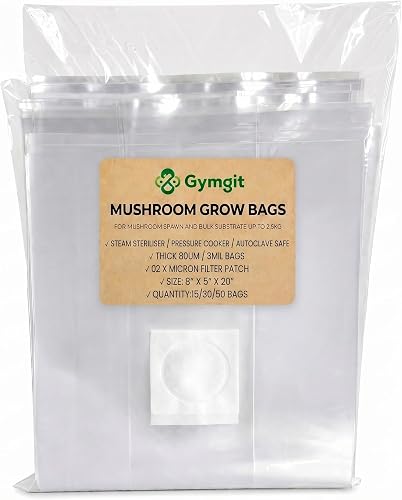
Prime Gymgit 30 Pack Mushroom Grow Bags with 0.2 Micron

Prime TonGass 60 Pack Autoclavable Mushroom Grow Bags

Prime SUCOHANS Mushroom Grow Bags 10-Pack 8x5x19
As an Amazon Associate we earn from qualifying purchases. Product prices and availability are accurate as of the date/time indicated.
Pros
- Thicker than standard bags for superior durability during sterilization and handling
- Fine 0.2 micron filter helps reduce contamination while maintaining airflow for colonization
- Stable upright design streamlines filling and inoculation
- Food grade autoclavable material works with home and commercial equipment
- Bulk 30 pack quantity suits repeated grows and small farm use
Cons
- Large size requires a roomy pressure cooker or autoclave for proper sterilization
- Single use design means repeat purchases for high volume growers
- Requires careful impulse sealing or folding to get best contamination control
Gymgit 30 Pack Mushroom Grow Bags are large 8 x 5 x 20 inch autoclavable bags designed for making sterilized fruiting blocks at home or on a small farm. They suit beginners, hobbyists, schools and commercial growers working with oyster, shiitake, lions mane and similar species.
The standout is the combination of extra thick 0.08mm polypropylene and a fine 0.2 micron filter patch. In practice, this means better resistance to punctures during filling and cleaner gas exchange that supports vigorous, consistent mycelium colonization.
Build quality feels a step above standard bags, with a gusseted base that stands upright for easier filling and inoculation. The reinforced heat sealed bottom holds 4.4 to 5.5 lbs of substrate securely and maintains seal integrity through high temperature sterilization cycles.
There are tradeoffs to consider. The large size needs a roomy pressure cooker or autoclave, and like all filter bags they are single use and require proper sealing or folding for best results.
Overall, these are durable, versatile and beginner friendly bags for reliable fruiting blocks. If you want thicker material, finer filtration and bulk quantity for repeated grows, this 30 pack is an excellent choice.
Material: Food grade polypropylene, 0.08mm thickness, clear finish
Size: 8 x 5 x 20 inches, holds 4.4 to 5.5 lbs of substrate per bag
Filter: 0.2 micron filter patch for CO2 outgassing and oxygen exchange
Sterilization: Autoclavable up to 250F at 15 PSI for 90 to 120 minutes
Quantity and use: 30 pack for fruiting blocks, grain spawn and bulk substrate
Pros
- Withstands autoclave sterilization for reliable contamination control
- Excellent breathability with fine 0.2 micron filtration
- Strong, tear resistant 80 micron film holds shape when full
- Transparent design simplifies monitoring without opening
- Large value pack for high volume growing
Cons
- Thin PE film still requires careful handling to avoid punctures from sharp substrate
- Large 20 inch height may be bulky for small pressure cookers or tight fruiting spaces
- Bags arrive unfinished and need proper sealing after inoculation for best results
The TonGass Autoclavable Mushroom Grow Bags are clear, side-gusseted spawn bags designed for sterilizing, inoculating, and fruiting mushrooms at home or in a small lab. The 6x5x20 inch size and 60-count set make them a practical choice for growers who run frequent batches.
Each bag includes a 0.2 micron filter patch that allows gas exchange while keeping contaminants out, which supports healthy colonization. In use, this means better airflow for mycelium without the need to open the bag and risk exposure.
Made from 80 micron polyethylene, about 3 mil per side, the film feels stronger than standard thin spawn bags. The gusseted base helps the bag stand upright when filled, and the material resists heat and swelling during sterilization and growth.
They are not puncture proof, so coarse substrate, rough handling, or overfilling can still cause tears. The tall profile also needs adequate headroom in your pressure cooker and fruiting area, plus a reliable heat seal or closure after inoculation.
Overall, this is a solid bulk option for indoor mushroom growers who want durable, breathable, and easy to monitor bags. If you sterilize your own substrate and value consistency across many grows, this set delivers strong functionality and convenience.
Size: 6 inches x 5 inches x 20 inches with side gussets for upright filling.
Material: Clear polyethylene, 80 micron thick per side for heat and tear resistance.
Filtration: 0.2 micron microporous filter patch for gas exchange and contaminant protection.
Count and Use: 60 bags per set, intended for indoor spawning and fruiting of fungus cultures.
Fill bags only two thirds full to leave room for air exchange and sealing, then sterilize according to your substrate recipe.
Allow bags to cool completely before inoculation in a clean space, then seal tightly with an impulse sealer or tight closure.
Store inoculated bags upright in a warm, clean indoor area and inspect through the clear film for growth and moisture.
Pros
- Autoclavable polypropylene supports proper sterile technique
- Fine 0.5 micron filtration helps reduce contamination risk
- Spacious capacity suits both beginners and small scale farms
- Simple sealable design works for indoor and outdoor cultivation
Cons
- Requires pressure cooker or autoclave plus sealer for best results
- 3 mil film needs careful filling to avoid punctures from coarse substrate
- Large footprint can be tight in small cookers and incubation spaces
These SUCOHANS myco bags are large sealable spawn bags designed for mushroom cultivation on sterilized substrate and grain. They are made for hobbyists, homesteaders and small scale growers who want to produce edible species at home.
The standout is the 0.5 micron filter patch with a generous breathable window that supports gas exchange while helping keep contaminants out. In real world use, that means cleaner, more consistent colonization for oysters, shiitake, lions mane and similar varieties when sterile technique is followed.
Built from 3 mil polypropylene in an 8 by 5 by 19 inch gusseted form, the bags feel sturdy yet flexible for filling and sealing. The material is autoclavable, so you can sterilize substrate directly in the bag and then seal for incubation indoors or outdoors.
They are not completely hands off, as you will still need a pressure cooker or autoclave plus a reliable sealing method. The large size boosts yield but can be awkward in compact cookers, and sharp husks or straw edges call for gentle handling.
Overall, these are a practical, versatile choice for growers who want dependable filter patch bags without complexity. If you want large, sterilizable bags for consistent edible mushroom projects, this set is well worth trying.
Brand: SUCOHANS, Model: Mushroom Spawn Bags with Filter Patch, Size: 8 inch x 5 inch x 19 inch gusseted bag.
Material: 3 mil polypropylene, Filter: 0.5 micron with 5.5cm x 5.5cm breathable window, Count: 10 bags per pack.
Use: Autoclavable for sterilized substrate and grain spawn, suitable for many edible mushroom species for indoor and outdoor cultivation.
Matching Gear to Your Grow
If you run small indoor batches of oyster or lion’s mane in an apartment, focus on handling and airflow. The 30 Pack Mushroom Grow Bags with 0.2 Micron Filter illustrates this style with an 8 x 5 x 20 Inch body, 0.08mm film, gusseted self standing base, and 0.2 micron patch. You get room for 4.4 to 5.5 lbs loads with sturdier film for repeated moves from cooker to shelf.
If you make spawn often and want to compare many bags side by side, clarity and quantity help. The TonGass Autoclavable Mushroom Grow Bag shows that approach with a 6 X 5 X 20 Inch clear body, 80 micron film, and 0.2 micron filter patches. Clear walls make it easier to see moisture lines and uneven hydration, and you can learn more in our grow bags and spawn resources section.
If you are trialing your first grain runs or outfitting a class, start simple and focus on prep. The Mushroom Bags,Mushroom Grow Bag Farm-Mushroom represents a basic breathable option with an 8 X 5 X 19 Inch size, 3 Mil polypropylene, and 0.5 micron filter. The coarser filter can breathe well, but you will need careful draining and gentle handling to avoid damp corners.
Common Mistakes
Mistake 1 is poor loading and rushing the cooldown. Underfilling or overfilling the jars or bags blocks steam flow and traps water, and not letting pressure release naturally pulls moisture into filters and seams. Leave headspace, keep filters dry, and allow a full natural release before you even crack the lid.
Mistake 2 is bagging grain that looks dry but feels damp. If kernels shine, stick to your hands, or leave water on a paper towel, they are too wet for the cooker. Spread grain thinner, increase air circulation, and wait until surfaces look matte. A few extra minutes of draining prevents days of stalled spawn.
Mistake 3 is handling hot bags like finished spawn. Stacking warm bags, shaking them to break up grain too early, or moving them to a cold draft causes condensation and wet spots. Let bags cool fully upright, then inspect seals and filters. If you need a smaller cooker routine, see our budget spawn canner picks for load ideas.
Who Should Wait or Buy Differently
Buying more bags will not fix chronically soggy grain, and this approach is not ideal for growers who have not yet dialed in hydration and drain time. If your last runs showed standing water, sour smells, or burst kernels, pause new orders and practice small grain batches first. This bulk bag style is also not a good fit if you only fruit ready made blocks and never sterilize grain at home.
Frequently Asked Questions
Why do my spawn bags look wet only after pressure cooking?
Surface water and steam trapped in the bag condense during heating and cooling. If grain went in damp, overfilled, or tightly packed, that moisture pools at the bottom. Improve draining, leave headspace, and cool bags upright without squeezing.
Is a 0.2 micron or 0.5 micron filter better for wet spawn?
A 0.2 micron patch filters finer particles while still allowing gas exchange, while a 0.5 micron patch can breathe a bit more freely. Either can work if grain is properly dried. Choose based on your contamination pressure and how humid your incubation space runs.
Should I open a bag to dry out wet spots?
No, opening sterile bags after processing invites contamination. Light condensation that redistributes is often usable, but pools of water with mushy or sour grain should be discarded. Adjust your next prep with longer draining, less fill, and a full natural cooldown.

Write Your Review
No reviews yet. Be the first to share your experience!