

If you are learning how to use boomroom tent for best budget, your real decision is not which tent looks impressive, it is how much controlled fruiting space you actually need for your species, your batch size, and your skill level without overspending on gear you will rarely use.
A budget setup still needs steady fresh air, stable moisture, and easy access for harvest, and those needs shift a lot between oyster mushrooms in wide trays and small lion’s mane blocks on a shelf. In this guide for November 2026, we lay out a simple framework so you can match tent size, ventilation, and running costs to your grow instead of buying too much tent too soon.
What Actually Matters
Size and Footprint Versus Usable Growing Space
Start with floor space and standing height, not just advertised square footage. A tent that measures 13 ft x 8.7 ft with a peak height of 6.6 ft sounds generous, and it can hold multiple racks, but you still need walkways, room for a humidifier reservoir, and clearance to open doors fully.
For most home growers, usable shelf area matters more than total tent volume. If you grow oyster mushrooms, you want wide shelves for bags and trays with open space around each block for air movement. If you only fruit a few gourmet blocks at a time, a full size cabin will waste energy and make humidity harder to keep even.
Our approach is to measure your available floor area first, then choose the smallest tent that still lets you reach every shelf comfortably. You can browse layouts and sizes in our Monotubs, Martha Tents and Fruiting Chambers collection before you commit to a footprint that dominates your room or garage.
Airflow, Ventilation and Humidity Control
Mushroom tents succeed or struggle based on air exchange. Look for dual doors and large mesh windows that let you create cross flow without leaving large openings where debris drifts in. Passive vents help, but you will still need a small fan and a humidifier on a controller for most species.
Think about where fresh air enters and where stale air settles. Oyster mushrooms in particular need constant fresh air to develop normal caps, and growers commonly report leggy stems and pale caps when air sits still for long periods. A tent with vents placed low and high, plus ports for cords and humidity lines, makes it easier to keep air moving without soaking one corner while another dries out.
On a budget, favor simple and adjustable ventilation over complex ducting. Mesh panels you can partially cover, doors you can zip partway, and a fan on a timer give you flexible control without costly add ons. Plan your rack layout so air passes around blocks, not just over the top shelf.
Fabric, Cleanability and Durability
Fabric choice affects cleaning time, light control, and how long the tent stays useful. High density 420D Oxford with PU3000mm waterproofing and UPF30+ protection resists splashes and outside light, which helps you keep conditions steady through seasonal changes. Smooth, wipeable walls are easier to sanitize between flushes than textured canvas that holds spores.
Also check seams, zippers, and floor design. Standing water from a humidifier can pool at the base, so a waterproof floor or a separate tray under racks saves a lot of scrubbing. Sturdy zippers that run smoothly when damp are worth more than extra pockets or windows you will rarely open.
If your grow sits in a garage, basement, or covered patio, seasonal features deserve attention. A dedicated AC port for summer and a heat resistant stove jack for cold seasons can help with climate control, though most indoor growers will rely on room heating and cooling instead. Choose fabric and ports that fit where you will actually run the tent, not where you might run it someday.
Setup Effort and True Running Costs
Purchase cost is only part of a budget build. Consider setup time, accessories you must still buy, and daily power and water use. A design with a high efficiency manual air pump and no heavy metal poles can pitch in about 5 minutes, which is helpful if you break the tent down between grows or share space with other projects.
Ongoing costs add up faster than many beginners expect. A large 116 ft² cabin needs a larger humidifier, more filtered water, and longer fan cycles than a compact martha. Before you commit, list what you already own, such as racks, hygrometer, fan, and humidifier, then favor a tent that works with those items instead of forcing you to upgrade everything at once.
For more ideas on keeping daily costs down, see our guide to using a mushroom grow tent on a budget, which walks through controllers, water habits, and fan schedules that prevent waste.
To see how these tradeoffs look in real gear, here are a few options that show the range from compact fruiting chambers to larger cabin style tents. Use them to compare doors, vents, fabric, and included accessories rather than as a ranked list.
This article contains affiliate links. If you buy through one of our links, FungiPop may earn a commission at no extra cost to you. Commissions never influence which products we recommend or how we rank them. Read our Affiliate Disclosure for details.
Quick Picks at a Glance

WildFinder Inflatable Tent with Awning
As an Amazon Associate we earn from qualifying purchases. Product prices and availability are accurate as of the date/time indicated.
Pros
- Inflatable air-beam structure eliminates heavy poles and speeds up setup
- Stove jack plus AC port enables comfortable camping in both winter and summer
- Generous standing height and floor area comfortably fits family gear and cots
- Waterproof and UV-resistant Oxford fabric handles rain and sun
Cons
- Heavy at 45.2 pounds, not ideal for backpacking or solo carrying
- Only one awning pole set included, so front and rear doors cannot both be shaded at once
- Requires manual pump and careful air pressure maintenance compared to traditional pole tents
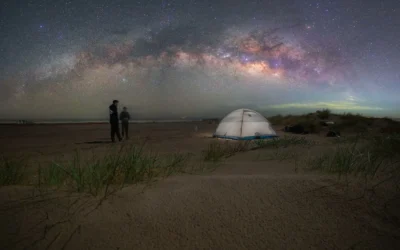
The WildFinder Inflatable Tent with Awning is a 116 sq ft blow up hot tent designed for 4 to 6 person family camping and glamping. With a 13 ft cabin length and 6.6 ft peak height, it is built for campers who want standing room and home like comfort without complex pole assembly.
Standout performance comes from its 5 minute inflation system using the included manual pump, which replaces heavy metal poles for faster pitching. The heat resistant stove jack for cold weather and dedicated AC port for summer give it true four season flexibility for year round trips.
Build quality centers on high density 420D Oxford polyester with PU3000mm waterproofing and UPF30+ sun protection for rain and sun resistance. Dual entry doors, large mesh windows and a free standing rectangular layout promote strong airflow while keeping debris and insects out.
There are tradeoffs to consider. At 45.2 pounds it is heavy to transport and best suited for car camping rather than hiking. Only one canopy pole set is included, so you can prop up either the front or rear door as an awning, but not both at the same time.
Overall, this is a strong pick for small groups, beginners and family campers who prioritize space, quick setup and all weather comfort. If you want a roomy inflatable hot tent with awning versatility for four season use, the WildFinder delivers excellent livability.
Size: 155.5 in L x 104.3 in W x 78.7 in H with 116 sq ft floor area and 6.6 ft peak height
Capacity and Season: 4 to 6 person occupancy, 4 season hot tent design for camping and hiking
Materials: 420D Oxford polyester body, polyester floor and rainfly, PU3000mm waterproofing, UPF30+ protection, zipper closure
Weight and Extras: 45.2 lbs, free standing installation, off white color, includes stakes, manual pump and one awning pole set, 1 year warranty
Matching Gear to Your Grow
If you grow in a small apartment for personal use, with a few lion’s mane or reishi blocks at a time, prioritize control and cleanability over volume. A compact martha or monotub lets you hold humidity steady with a small ultrasonic humidifier and a simple controller, and you can wipe it down in minutes. A full cabin would be hard to fill, harder to keep even, and more costly to run for such a small batch.
If you grow oysters and want to scale up without overspending, usable width and cross ventilation matter most. The WildFinder Inflatable Tent with Awning illustrates this tradeoff well with its 13 ft x 8.7 ft footprint, dual doors, and large mesh windows that allow maximum airflow while keeping outdoor debris out. The con is scale, you will need serious shelving and humidification to fill that 116 ft² space evenly, so only choose this path if you have room to walk inside and can keep racks fairly full. Our oyster mushroom tent picks can help you compare narrower options that suit heavy air exchange needs.
If you grow in a garage, basement, or covered patio where temperatures swing, fabric strength and climate ports matter more than extra height. The WildFinder Inflatable Tent with Awning shows what to look for with durable 420D Oxford fabric, PU3000mm waterproofing, a stove jack for cold seasons and an AC port for summer, plus convertible doors that double as sunshade awnings with the included canopy pole set. Be aware of the limits, you receive only one pole set so both doors cannot serve as awnings at once, and the manual pump avoids poles but still takes physical effort to inflate fully. It is rated 4.4 out of 5 from 11 reviews, which suggests solid satisfaction but also reminds you to check setup and space needs carefully.
In all cases, spend limited funds on control, not size. A reliable humidity controller, an easy to clean rack, and a small fan on a timer will improve results more than extra square footage. You can also compare design philosophies in our BoomRoom comparison to see how automated fruiting chambers differ from tent style builds for budget growers.
Common Mistakes
Mistake: Buying far more tent than you can fill and humidify. A half empty cabin swings between damp and dry, and you pay to run a humidifier for empty air while corners still dry out. Start with the harvest rhythm you can sustain each week, then size racks and tent to that rhythm and leave room to expand later.
Mistake: Placing the humidifier mist outlet too close to fresh pins. Direct mist soaks caps, invites bacterial blotch, and leaves yellow spots and soggy edges on oysters and lion’s mane. Aim mist above or beside racks, let the fan distribute it gently, and keep a drip tray under the outlet to catch condensation.
Mistake: Sealing the tent tight to hold humidity and forgetting fresh air. Low air exchange leads to long stems, small caps, and weak texture, especially for oysters that demand constant turnover. Crack vents, run short and frequent fan cycles, and wipe walls and floors between flushes to prevent spore and mold buildup that chokes airflow.
Who Should Wait or Buy Differently
A large boomroom style tent is not ideal for renters with tight floor space, growers who only fruit a couple blocks per month, or anyone who cannot commit to weekly cleaning and daily humidity checks, so you should not buy a cabin size tent right now if that sounds like you. You will save money and avoid contamination headaches by starting with a monotub or small martha, building steady harvests, and revisiting a larger tent when your batch size, available space, and budget clearly demand it.
Frequently Asked Questions
Can I run a boomroom tent on a budget without buying all new gear?
Yes, in most cases you can reuse racks, a small fan, and a hygrometer you already own and focus spending on a humidity controller and a reliable humidifier. Choose a tent size that fits your current racks so air can move around each shelf, and add automation piece by piece as harvests become consistent.
How do I keep humidity steady without wasting water and power?
Use a controller with a narrow band, keep doors and vents mostly closed, and direct mist away from blocks so the sensor reads room air rather than wet spray. Elevate the reservoir for easy refills, check for leaks around ports and zippers, and clean the humidifier disc regularly so output stays strong without longer run times.
Is a large inflatable tent overkill for a beginner?
For many beginners it is, because a 13 ft x 8.7 ft cabin with 6.6 ft peak height takes meaningful floor space and needs larger humidity and airflow support to stay even. If you are still learning sterile technique and dialing in a couple blocks, start small and move up once you harvest on a regular schedule and know your space needs.





Write Your Review
No reviews yet. Be the first to share your experience!