

If you are weighing still air box vs flow hood for beginners for home grower use, you are really deciding how much clean air control you need for your first year of agar plates, grain jars and liquid culture. A still air box gives you a calm, enclosed space for careful hand work, while a flow hood pushes filtered air toward you to sweep particles away, but it costs far more and needs dedicated space.
Your best choice depends on four variables: what species you grow, how many transfers you do per month, how much room and budget you have, and how patient you are with slow, deliberate sterile moves. This buying guide walks you through that decision framework so you can match your habits to the right style of clean work, without buying more gear than you will actually use.
What Actually Matters
Before you compare models, it helps to understand what keeps home mycology work clean. Success comes less from fancy equipment and more from still room air, organized tools, disinfected surfaces and unhurried hands. Keep those basics in mind as you evaluate any box or hood.
Still Air Protection Versus Filtered Airflow
A still air box does not filter air, it calms it. The clear walls block drafts from doors, heaters and your own movement, so airborne dust and spores settle instead of drifting across an open plate. You do your work inside through arm holes or side zippers, after wiping down interior walls and letting the air rest.
A flow hood works the opposite way, with a fan and filter that create a steady stream of clean air over your work surface. That active flow is faster and more forgiving if you move a little, which is why busy labs prefer it. For most beginners doing a few grain inoculations or agar transfers per week in a small bedroom or closet lab, the passive calm of a box is usually enough, and it teaches excellent habits that carry over if you upgrade later. You can explore more options in our Sterile Lab Tools archive to see how boxes fit alongside other clean transfer gear.
Workspace Size, Arm Ports and Viewing Clarity
Size determines comfort more than you might expect. You need room for a stack of plates or jars plus alcohol, paper towels, a syringe or scalpel tray, and space to move without brushing lids or knocking tools. The example boxes in this guide range from about 31.5×20.5×20.5 inches up to about 35.5 x 23.5 x 23.5 inch and 35.8×23.2×22.8 inches when unfolded, which growers commonly report as enough for a working plate stack and a few jars at once.
Pay close attention to how you get your hands and materials inside. Elastic arm holes keep the opening snug around your wrists and help maintain calm air, while large zippered side doors make it easy to load bulky grain bags or a monotub liner before you start. Clear, scratch resistant PVC or similar transparent plastic matters too, because you will be watching tiny mycelium edges and bacterial spots through the walls. If you wear long sleeves or have broad shoulders, look for ports that feel comfortable rather than tight, since cramped arms lead to rushed moves.
Setup Time, Storage and Cleaning Routine
Most home growers do clean work on a kitchen table and then need that table back for dinner. Pop up and collapsible designs that assemble in a few minutes and fold flat are therefore a major advantage. One model here folds to only 13.8×13.8×4.7 inches for closet storage, while another folds to occupy only 4 cubic feet, so you should measure your shelf or under bed space before you choose.
Cleaning ease is just as important as setup speed. Smooth interior walls that wipe down quickly with disinfectant and dry without pooling will get used far more often than textured fabric that holds moisture. Remember that isopropyl alcohol is flammable and should be kept away from any open flame, in a well-ventilated area, and never spray heavily inside a small enclosed box right before using an alcohol lamp. For context on how sterile work connects to your overall prep, our Sterilization & Pasteurization section explains why clean grain prep and clean transfers must go together.
Budget Path and Skill Building
For beginners, a still air box is normally the sensible entry point because it costs far less than a hood, needs no replacement filters, and forces you to learn slow sterile discipline. You can practice loading, organizing, flame sterilizing your scalpel away from the box, cooling tools, and moving plates with lids held as shields. Those skills directly improve your success with oysters, lion’s mane and other gourmet species, not just active varieties.
A flow hood starts to make sense when you are doing daily agar work, pouring dozens of plates, running a small culture business, or you struggle with allergies or a very drafty house where still air is hard to maintain. Until then, put the savings toward quality grain, a reliable pressure canner and good cultures. If you are still deciding on sterilization gear, read our presto 23-Quart vs instant pot for grain jars breakdown to balance your whole budget.
To show what these tradeoffs look like in real products, here are a few options that show the range from roomy pop up tents to bundled workstations with added accessories:
This article contains affiliate links. If you buy through one of our links, FungiPop may earn a commission at no extra cost to you. Commissions never influence which products we recommend or how we rank them. Read our Affiliate Disclosure for details.
Quick Picks at a Glance

Prime Watayo Pop-Up Mushroom Still Air Box 35.5 x 23.5

Prime amymark Still Air Box Mushroom Grow Tent

Prime Myco Labs Large Still Air Box Bundle

Prime ACOVER Large Still Air Box 31.5×20.5×20.5 Mushroom
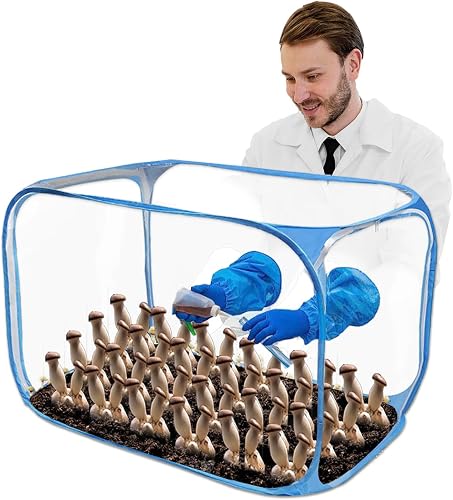
Prime Jaxbo Large Still Air Box for Mushroom Growing
As an Amazon Associate we earn from qualifying purchases. Product prices and availability are accurate as of the date/time indicated.
Pros
- Spacious interior fits full mushroom grow kits and supplies
- Transparent body offers full visibility for monitoring growth
- Sealed design helps limit dust for cleaner sterile work
- Quick pop-up setup with fold-flat storage
- Lightweight, waterproof and durable PVC construction
Cons
- PVC needs regular disinfecting and full drying to prevent odor or creasing
- No built-in filter, fan or humidity control, so climate management is manual
- Large footprint requires a dedicated table space during use
The Watayo Mushroom Still Air Box is a large pop-up grow tent designed for home mushroom cultivation and sterile inoculation work. It is ideal for beginners and hobby mycologists who want a cleaner, more controlled space without building a permanent lab setup.
With a roomy 35.5 x 23.5 x 23.5 inch interior, it comfortably holds grow bags, jars, tools and dishes for efficient workflow. The dual elastic arm holes and side zippers let you load supplies easily and work with both hands while limiting outside airflow and dust.
The tent uses clear, waterproof PVC that offers full visibility to watch colonization and fruiting progress. The material feels lightweight yet sturdy, and the pop-up frame sets up in minutes while folding flat for closet or shelf storage.
As a passive still air box, it does not include filtration, fans or humidity controls, so results depend on good sterile technique. You will also need a large, flat table for setup, and the PVC should be disinfected and fully dried after each use.
Overall, this Watayo grow tent is a smart, portable solution for cleaner home grows and mycology experiments. If you want affordable contamination control with easy setup and storage, it is a highly practical choice.
Brand: Watayo
Unfolded Size: 35.5L x 23.5W x 23.5H inches
Materials: Transparent PVC body with elastic fabric arm ports
Design: Pop-up collapsible frame with dual side zippers and dual arm holes
Use: Mushroom inoculation, colonization and fruiting observation
Patent: US D993,825 S
Pros
- Proven contamination control with users reporting hundreds of clean agar pours in real use
- Huge yet portable, folds flat for easy storage in small apartments and labs
- Durable waterproof transparent material that is simple to disinfect and wipe down
- Blue tint improves visibility for cleaning compared to black tents and suits beginners to experienced growers
Cons
- Refolding into the storage bag takes practice and instructions could be clearer
- Fixed integrated sleeves can create a bellows effect that stirs air, some users prefer cutting them off
- Plastic walls feel thin and arm holes sit high for shorter tasks or low trays
The amymark Still Air Box is a portable 35.8x23.2x22.8 inch mushroom growing tent designed to create a clean, still-air workspace anywhere. It is built for home mycologists, hobbyists and educators who need reliable sterile technique for agar, spore syringes, liquid culture and tissue culture.
In real use, it stands out for contamination control and sheer roominess. Users report pouring hundreds of agar cups with excellent success, with plenty of space for grow bags, grain jars and bulk substrate at once. The clear walls allow constant monitoring, which helps both precision work and teaching.
The design uses a pop-up folding frame with zippers that sets up fast on a table and collapses flat for storage. The material is transparent, waterproof and scratch resistant, and the blue tint makes spills and residue easier to spot and wipe clean. Dual arm ports plus a zippered side door give flexible two-handed access.
It is not perfect. Refolding it back into a compact circle takes practice and first-time setup can be frustrating. The integrated sleeves can pump air if you move quickly, and the thin walls plus higher arm holes may feel less ideal for very low or detailed bench work.
Overall, this is a practical, beginner-friendly alternative to a bulky glove box or dedicated lab. If you want affordable, large and portable contamination protection for mushroom cultivation, it is a solid value that gets the job done.
Brand: amymark, Model: Still Air Box Mushroom Growing Tent, Indoor use for mushroom cultivation and lab work.
Dimensions: 35.8W x 23.2D x 22.8H inches, Capacity: 143.64 liters, Shape: Square box, Color: Blue.
Material: Transparent waterproof fabric and plastic, scratch resistant, unfinished modern style.
Design: Foldable pop-up frame with zipper closure, zippered side door plus dual two-handed arm entry ports.
Pros
- Spacious interior fits multiple cultures and tools without crowding
- Truly portable and lightweight with included carry case for storage
- Clear walls provide excellent visibility during detailed work
- All in one kit saves time sourcing gloves and cleaning supplies separately
- Wipeable waterproof material simplifies cleanup
Cons
- Soft sided tent design is less rigid and durable than hard acrylic still air boxes
- Lightweight frame can shift during use and needs a flat, draft free table for best results
- Elastic arm ports may feel snug for larger users and offer no active filtration like a flow hood
The Myco Labs Large Still Air Box Bundle is a portable clean air workstation designed for home mycology work including agar pouring, grain transfers and inoculation. It is aimed at hobbyists and experienced growers who need a dedicated still air space without building a permanent lab.
In use, the enclosed tent helps minimize air movement around your cultures while the large viewing area and elastic arm ports keep hands steady for precise tasks. The included sterile nitrile gloves and Eco-Cleanse spray help you prep the workspace quickly, so beginners can follow good clean handling practices right out of the box.
Design centers on portability and visibility, with a 30 by 21 by 21 inch transparent enclosure that offers 7.3 cubic feet of working room. The foldable plastic frame weighs just 1.2 pounds and collapses flat, and the waterproof walls wipe down easily between sessions while the carry case simplifies storage.
As a soft sided tent, it will not feel as solid as a rigid acrylic box and the light frame needs a stable, draft free table to stay put. Fit through the elastic ports can be snug, and like all still air boxes it relies on calm air rather than filtered airflow, so technique and prep still matter.
Overall, this bundle is a convenient, reusable starter solution for maintaining a cleaner home lab environment in small spaces. If you want an affordable, space saving SAB kit for agar and grain work, it delivers practical value and ease of use.
Model: SAB3 by Myco Labs, large folding still air box tent for mycology lab use.
Dimensions: 30 inch L x 21 inch W x 21 inch H with 7.3 cubic feet chamber volume, weight 1.2 pounds.
Materials: Plastic frame with transparent waterproof enclosure and mylar interior, black exterior with elastic arm ports.
In the box: Still air box tent, storage carrying case, individually wrapped sterile nitrile gloves, 1 oz Eco-Cleanse lab surface spray.
Pros
- Spacious interior comfortably fits trays, petri dishes, liquid culture jars and monotub setups
- Lightweight yet airtight design praised by users for easy daily access and dependable zippers
- Quick tool-free assembly with collapsible frame for easy transport and storage
- Complete kit with meter, bottles, bags and gloves is beginner friendly
- Smooth PVC surface wipes clean quickly to help maintain a sterile environment
Cons
- PVC cover can fit very tight on first assembly and may need warming to stretch over the frame
- Plastic and fiber-tube construction is less rigid than hard acrylic glove boxes
- Ventilation design aids airflow but does not replace a true HEPA flow hood for lab-grade sterility
The ACOVER Large Still Air Box is a 31.5 x 20.5 x 20.5 inch collapsible grow tent designed for mushroom mycology, spore inoculation and plant tissue culture. It is built for home scientists, hobby growers and beginners who need a large sterile workspace without a permanent lab.
Standout features include front and rear convection ventilation to help manage CO2 while keeping air still, plus side openings for two-person work or power cords. In real world use, owners report successful grows, easy zipper access for daily checks, and enough room for agar plates, syringes and small monotubs.
Design centers on a high toughness fiber-tube frame wrapped in clear, tear-resistant PVC for good sealing and visibility. The tent feels lightweight and airtight once assembled, and the smooth interior wipes down fast for cleaning and disinfection between sessions.
There are tradeoffs to note. First assembly can be snug, often requiring warming the cover to stretch it over the frame. The flexible PVC walls are less rigid than acrylic boxes, and this is not a powered HEPA flow hood, so strict sterile technique is still required.
Overall, this is a smart, space saving solution for mycology hobbyists who want size, visibility and a full starter kit in one package. If you want an affordable, portable still air box for inoculation and observation, this ACOVER tent is well worth considering.
Brand: ACOVER
Model Type: Large Still Air Box Mushroom Grow Tent
Dimensions: 31.5L x 20.5W x 20.5H inches
Chamber Volume: 10.5 cubic feet
Frame Material: Fiber tube with plastic connectors
Cover Material: Transparent tear-resistant PVC
Included: Grow tent, digital humidity and temperature meter, 2 spray bottles, grow bags, gloves, storage bag
Best For: Agar work, spore syringes, liquid culture, petri dishes, monotub and indoor horticulture projects
Pros
- Large interior comfortably fits multiple trays, jars and culture tools
- Clear plastic offers excellent visibility for detailed sterile work
- Easy pop-up setup and collapsible fold-down storage
- Durable zippers and tear-resistant material hold up with repeated use
Cons
- Flexible plastic walls are not as rigid as hard acrylic still air boxes
- Folding it back down takes practice and can be tricky on first tries
- Attached gloves offer less dexterity than bare hands for detailed agar work
The Jaxbo Mushroom Still Air Box is a portable, collapsible mycology tent designed to create a clean, still air workspace for home growers and hobby scientists. With a large 35.5 inch footprint, it is built for inoculating grain, pouring agar, handling liquid culture and doing tissue culture work.
Its standout feature is the combination of dual side access zippers and built-in gloves that let you work without directly disturbing internal airflow. Users report it works well for gourmet mushroom inoculation, with clear visibility that makes it easy to see plates, jars and tools during delicate transfers.
The design uses clear plastic on five sides for full observation, set in a lightweight rectangular frame that pops up quickly. The material stays clear rather than blurry, zippers run smoothly, and long term users note it resists tearing with regular folding and storage.
It is not a rigid acrylic box, so walls can flex and the lightweight build can shift if bumped. Folding it back into its compact square shape takes practice at first, and the attached gloves offer less fine dexterity than working with bare hands inside a traditional tote style box.
Overall, this is a practical, space saving solution for beginners to intermediate mycologists who need sterile technique without a permanent lab setup. If you want a portable and easy to store still air workspace for mushroom cultivation, this Jaxbo tent is a smart pick.
Brand: Jaxbo, Model: Mushroom Still Air Box Grow Tent
Unfolded Size: 35.5 x 23.5 x 23.5 inches for spacious sterile work area
Folded Size: 13.8 x 13.8 x 4.7 inches for compact storage and transport
Material: Clear plastic with rectangular frame, lightweight and portable
Access: Two side zippers plus integrated gloves for clean handling
Best For: Agar dishes, grain inoculation, liquid culture, tissue culture and mushroom fruiting
Matching Gear to Your Grow
There is no single winner in the still air box vs flow hood for beginners for home grower debate, only the right match for your space and routine. Use these common home scenarios to narrow your short list and focus on the features you will notice every session.
If you live in an apartment and only inoculate grain bags or jars a couple times per month, prioritize a large, simple tent with wide side zippers and tall headroom. The Watayo 35.5 x 23.5 x 23.5 Inch Mushroom Still Air and the Still air Box – Mushroom Growing both offer that roomy unfolded footprint around 35 inches wide, which gives you space to arrange syringes, jars and a waste bag without stacking. Their transparent walls and elastic hand ports help you see clearly while keeping drafts out, and they fold away quickly when guests come over.
If you are moving into weekly agar transfers, cloning mushrooms from the grocery store, or cleaning up spore prints, look for organization and comfort upgrades. The Mushroom Mycology Large Still Air Box 31.5X 20.5X includes front and rear convection ventilation for gas exchange, a side opening that can support two person inoculation practice or a power cord pass through for a heating pad, plus extras like gloves, humidity meter and spray bottles in the kit. The Myco Labs Large Still Air Box Bundle takes a different approach with a portable workstation, nitrile gloves and carrying case included, which suits growers who want everything stored together and set up in seconds on a small desk.
If storage is your hardest limit, such as a dorm, rental bedroom or shared kitchen, choose specifically for fold size and wipe down ease. The Mushroom Still Air Box 35.5×23.5×23.5 Inches unfolds to a full work chamber with five transparent sides for viewing from all angles, yet collapses for easy carrying and closet storage. Pair that kind of packable box with a tidy fruiting plan, like the ideas in our Monotubs, Martha Tents & Fruiting Chambers collection, so your clean work and your fruiting space stay in balance.
Common Mistakes
Mistake one is working too fast inside the box. New growers often wave their arms in and out, reach over open plates, or talk and breathe directly over jars. Slow down, arrange every tool before you close the box, let the interior air rest after loading, keep movements low and deliberate, and never skip a proper sterile transfer step like cooling a hot blade or wiping syringe ports.
Mistake two is choosing a drafty or dusty location. Setting up next to an open window, a room fan, a forced air vent or a high traffic hallway defeats the purpose of still air, even with good walls. Turn off ceiling fans, close doors, wait after sweeping or shaking bedding, and wipe the table under the box. A calm bedroom corner will outperform a breezy living room every time.
Mistake three is overloading a small chamber or neglecting cleanup. Cramming in too many bags, stacking warm freshly sterilized jars, or leaving spilled agar and grain dust inside invites contamination next session. Work in smaller batches, let sterilized materials cool fully outside the box, remove trash promptly, and wipe all interior surfaces after each use so the next session starts truly clean.
Who Should Wait or Buy Differently
A pop up still air box is not ideal for growers who need daily high volume production, who pour and transfer in a garage woodshop full of sawdust, or who want to work standing up with large trays that will not fit through arm ports or zippered doors. If you have severe mold allergies, run a busy culture swap group, or already know you will outgrow hand holes within a few months, you may be better served saving for a dedicated hood and filter setup or building a permanent clean room corner instead of buying a temporary tent you will rarely use.
Frequently Asked Questions
Do beginners really need a flow hood to succeed?
No, most beginners succeed with a still air box when they combine it with careful grain preparation and patient technique. A hood is faster and more comfortable for frequent work, but it is not required for learning agar, grain to grain, or spore syringe inoculation at home.
What size still air box should a home grower choose?
Choose a box that holds your typical batch plus tools without crowding, which for many home growers means a footprint around 31 to 35 inches wide and about 20 to 23 inches deep and tall. Taller walls help with jars and bottles, while wide side doors help with bulk bags. When in doubt, measure your largest tray or bag and add room for your hands to move freely.
How do you keep a still air box clean between uses?
Store it dry and folded, then set it up early so interior air can settle before you work. Wipe interior walls and your table with disinfectant, load only cooled and wiped materials, work slowly, and wipe again after you finish. Replace worn gloves, air out any strong fumes in a ventilated space, and keep the box away from open flames during disinfection.






Write Your Review
No reviews yet. Be the first to share your experience!